Beginner’s Guide to Heat Treatment for Alloy Steel Castings |
Heat treatment for alloy steel castings is a controlled process that alters the physical and mechanical properties of metal components to meet specific performance requirements. This guide covers the essential heat treatment methods, their applications, and practical considerations for engineers and manufacturers working with alloy steel castings.

Why Heat Treatment Is Essential for Alloy Steel Castings
Alloy steel castings require heat treatment to achieve optimal hardness, strength, and toughness for demanding applications. The heat treatment process refines grain structure, relieves internal stresses from casting operations, and achieves the precise mechanical properties required for critical components. Without proper heat treatment, castings may lack the durability and performance needed for challenging environments. Understanding the relationship between thermal cycles and material properties enables manufacturers to produce components that meet exacting specifications consistently.
Primary Heat Treatment Methods for Alloy Steel Castings
Annealing
Annealing involves heating alloy steel above its critical temperature and cooling slowly within the furnace. This heat treatment for alloy steel castings produces a soft, ductile microstructure with improved machinability. The slow cooling rate allows complete transformation to a uniform grain structure, reducing hardness while maximizing workability. Annealed components are easier to machine and form, making this process ideal for preparatory stages before final manufacturing operations. For architectural applications requiring precise dimensions, consider working with a Custom Precision Casting Architectural Hardware Fittings supplier – suijin that understands heat treatment requirements.
Normalizing
Normalizing heats the steel above its critical range then cools it in ambient air, producing harder and stronger properties than annealing while maintaining good toughness. The air cooling creates a more refined grain structure compared to furnace cooling methods. This heat treatment process suits carbon and low-alloy steels where consistent mechanical properties across batches are essential. Normalized steel offers better strength-to-weight ratios for structural applications requiring reliable performance. Reference materials on en.wikipedia.org discuss how these metallurgical processes contribute to overall manufacturing quality.
Quenching and Tempering
Quenching rapidly cools heated steel using water, oil, or polymer media to develop maximum hardness in alloy steel castings. This aggressive cooling transforms austenite into martensite, creating a hard but brittle microstructure. Subsequent tempering reheats the material below its critical temperature to reduce brittleness while retaining desirable hardness. The quenching and tempering process enables precise control over the final balance of strength, toughness, and wear resistance.
Heat Treatment Process Comparison
| Process | Temperature Range | Cooling Method | Primary Benefit |
|---|---|---|---|
| Annealing | 700-900°C | Furnace cooling | Maximum softness, excellent machinability |
| Normalizing | 800-950°C | Air cooling | Uniform grain structure, balanced properties |
| Quenching | 850-1050°C | Water/Oil/Polymer | Maximum hardness development |
| Tempering | 150-650°C | Air cooling | Balanced hardness and toughness |
Each heat treatment method offers distinct advantages depending on the specific alloy composition and end-use requirements. Selection should consider the required mechanical properties, component geometry, and production efficiency goals for optimal results.
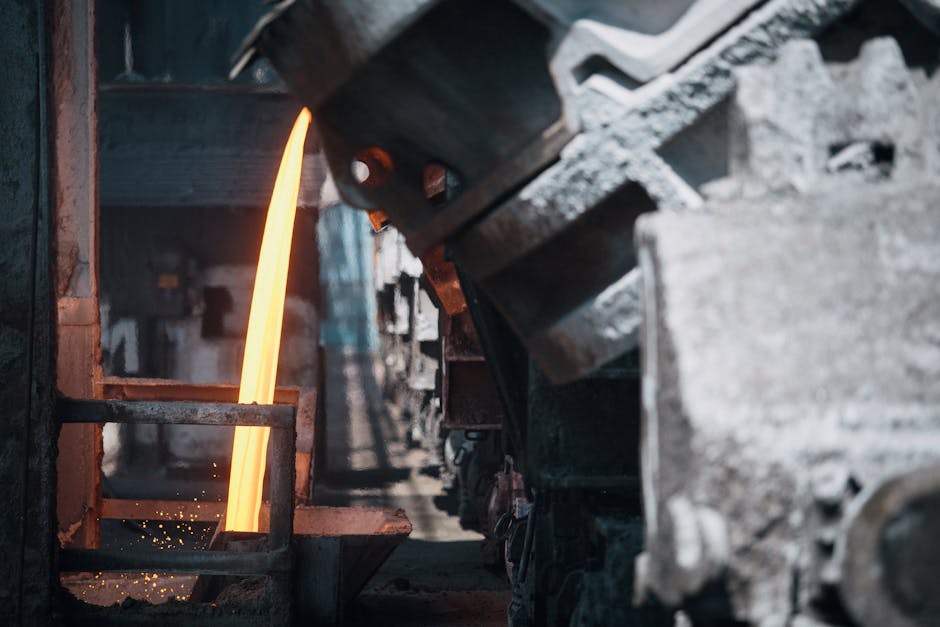
Step-by-Step Heat Treatment Process for Alloy Steel Castings
Successful heat treatment for alloy steel castings requires careful attention to each stage of the thermal cycle. The following ordered steps outline the complete process workflow that ensures consistent, reliable results across production batches. Following guidelines from www.nist.gov helps ensure proper documentation and quality control procedures.
- Pre-heating: Gradually heat the casting to remove moisture and thermal gradients within the wall thickness
- Austenitizing: Heat to the appropriate temperature range for the specific alloy composition to achieve full austenite transformation
- Soaking: Hold at temperature for a duration calculated based on section thickness to ensure complete transformation
- Quenching: Rapid cooling using the appropriate medium (water, oil, or polymer) to develop target hardness
- Tempering: Reheat to calculated temperature to reduce brittleness while retaining necessary hardness levels
- Quality inspection: Verify hardness values, microstructure characteristics, and dimensional accuracy against specifications
Applications of Heat-Treated Alloy Steel Castings
Heat-treated alloy steel castings serve critical roles across numerous industries where reliable performance under stress is essential. The marine industry relies on Custom Mirror Polished Marine Cruise Ship Parts supplier – suijin that maintain structural integrity in harsh saltwater environments. Valve bodies for Custom Galvanized Explosion-Proof Valve Body supplier – suijin require precise heat treatment to ensure safety and reliability under pressure. Architectural hardware fittings benefit from controlled properties that ensure long-term durability in exterior applications. Industrial equipment components such as Best Investment Casting Clamp Base supplier – suijin depend on consistent heat treatment for dimensional stability under heavy loads.
Consumer products also benefit from optimized heat treatment processes. factory Stainless Steel Pressure Cooker Parts manufacturer – suijin require specific hardness and corrosion resistance achieved through carefully controlled thermal processing. factory Water Glass Casting Weighing Hook manufacturer – suijin demonstrate how heat treatment enables high-strength components for industrial lifting applications. The versatility of China Alloy Steel Curtain Bracket manufacturer – suijin showcases how thermal processing provides the strength and durability needed for architectural installations.
Key Parameters for Successful Heat Treatment
Several critical parameters influence the outcome of heat treatment for alloy steel castings. Careful control of each factor ensures consistent results across production runs and meets specified mechanical property requirements. Following accessibility standards from www.w3.org ensures proper documentation and communication of these parameters.
- Chemical composition of the alloy steel determines response to thermal cycles and achievable properties
- Section thickness and mass of the casting affects heating and cooling rates throughout the cross-section
- Target mechanical properties including hardness, tensile strength, and impact resistance define process selection
- Heating and cooling rates must be controlled to prevent thermal gradients that cause distortion
- Quenching medium selection depends on alloy grade and severity of quench required
- Tempering temperature and duration precisely control the final balance of hardness and toughness
Common Defects and Prevention Strategies
Several defects can compromise the quality of heat-treated alloy steel castings if proper procedures are not followed. Quench cracking occurs when excessive cooling rates or poorly designed casting geometry create excessive thermal stresses. Distortion develops when heating or cooling is uneven across the component, causing differential expansion and contraction. Soft spots result from inconsistent heat treatment parameters within a batch or inadequate soaking time at temperature.
Prevention strategies include designing castings with uniform wall thickness where possible, using preheating to reduce thermal gradients, and selecting appropriate quenching media for specific alloy compositions. Following established industry guidelines significantly reduces the occurrence of these common quality issues and ensures reliable component performance.
Quality Standards and Certification Requirements
Quality assurance in heat treatment for alloy steel castings follows established international standards. Facilities should maintain documented procedures, calibrated equipment, and trained personnel to ensure consistent results across all production batches.
Regular testing of sample specimens verifies that mechanical properties meet specification requirements. Hardness testing, tensile testing, and impact testing provide quantitative data confirming proper heat treatment execution. Metallographic examination reveals microstructure characteristics that correlate with expected performance under service conditions.
Selection Checklist for Heat Treatment Services
| Factor | Consideration | Importance Level |
|---|---|---|
| Furnace capabilities | Atmosphere control, temperature uniformity within ±10°C | Critical |
| Quench medium options | Compatibility with specific alloy grades | High |
| Process certification | ISO compliance, documented control procedures | High |
| Testing capabilities | Hardness testing, microstructure analysis available | Medium |
| Turnaround capacity | Batch size limitations, scheduling flexibility | Medium |
When evaluating heat treatment providers, request documentation of their quality management system and examples of similar work for your specific alloy and application. This due diligence ensures your components receive appropriate processing to meet performance requirements.
Frequently Asked Questions
What is the purpose of tempering after quenching alloy steel castings?
Tempering reduces the brittleness caused by rapid quenching while retaining adequate hardness for the intended application. The process reheats the steel below its critical temperature, allowing internal stresses to relieve and precipitating carbides that improve toughness without excessive hardness reduction.
How long does heat treatment typically take for alloy steel castings?
Complete heat treatment cycles range from several hours to multiple days depending on process type, component size, and alloy composition. Quenching and tempering typically requires 8-24 hours total, while full annealing may take 24-72 hours for large castings to ensure complete transformation throughout the cross-section.
Can all alloy steel castings be heat treated?
Not all alloy steels respond equally to conventional heat treatment methods. Low-alloy steels with adequate carbon content respond well to standard processes, while highly alloyed austenitic stainless steels require different approaches such as solution treatment. Understanding the specific alloy grade determines the appropriate heat treatment parameters and expected outcomes.
What quenching medium should be used for alloy steel castings?
Quench medium selection depends on the alloy composition, section thickness, and desired properties. Water provides the fastest cooling rate but risks quench cracking in complex geometries. Oil cooling offers moderate rates with reduced cracking risk for most alloy steels. Polymer quenchants provide adjustable cooling characteristics for specific application requirements.
How is hardness verified after heat treatment?
Hardness verification uses standardized testing methods including Rockwell, Brinell, or Vickers scales depending on material type and specification requirements. Microstructural examination confirms proper phase transformation. Tensile and impact testing provides additional verification of mechanical properties for critical applications where service conditions are demanding.