Introduction
Porosity in stainless steel investment castings is more than a cosmetic flaw: it can weaken load-bearing sections, reduce pressure tightness, and undermine corrosion performance. To reduce it effectively, manufacturers need to distinguish between gas-related and shrinkage-related voids, then trace each defect back to melting practice, shell design, gating, feeding, and solidification control. This article outlines the main causes of porosity in common stainless grades and explains the process adjustments that have the greatest impact on defect prevention. By the end, readers will have a practical framework for diagnosing porosity sources and improving casting quality, yield, and part reliability.
Why Porosity in Stainless Steel Investment Casting Matters
In the production of stainless steel investment casting components, porosity remains one of the most persistent and deleterious metallurgical defects. The presence of internal or surface voids fundamentally compromises the mechanical integrity, corrosion resistance, and pressure tightness of the final cast part. When these defects go undetected, they can lead to catastrophic premature failures in critical operating environments, driving up scrap rates and escalating overall production costs.
How Porosity Is Defined
Porosity in investment castings manifests as localized voids or cavities within the metal matrix. Metallurgically, these defects occur when liquid metal undergoes volumetric contraction without adequate feeding, or when dissolved gases precipitate out of the melt during the rapid solidification phase. In common austenitic and martensitic stainless steel grades, such as 304, 316, and 410, porosity exceeding just 2% by volume can reduce ultimate tensile strength by up to 15% and significantly lower the fatigue limit of the component. The defect is typically categorized into two primary mechanisms: gas porosity, which presents as smooth, spherical voids, and shrinkage porosity, which appears as irregular, dendritic cavities. Accurately classifying the specific defect morphology is the critical first step toward implementing precise metallurgical corrections and preventing batch rejections.
How Porosity Types and Severity Are Compared
Assessing the severity of porosity requires rigorous non-destructive evaluation (NDE) techniques, predominantly radiographic testing (RT) aligned with recognized industry standards like ASTM E192 or E446. These standards provide reference radiographs that allow metallurgical engineers to assign severity levels ranging from Level 1 (minor, highly dispersed) to Level 5 (severe, concentrated). Comparing the types and severity of porosity dictates whether a casting is suitable for its intended environment, particularly for demanding application fields such as aerospace structural components or high-pressure fluid handling systems where hermetic seals are mandatory.
| Porosity Type | Visual Appearance | Primary Root Cause | Typical Location |
|---|---|---|---|
| Gas Porosity | Smooth, spherical, often clustered | Moisture in the ceramic shell, dissolved hydrogen/nitrogen | Near surfaces or in upper casting sections |
| Shrinkage Porosity | Irregular, dendritic, jagged edges | Inadequate feeding, isolated thermal hot spots | Thick cross-sections, transitions, or near gates |
Process Variables That Reduce Porosity
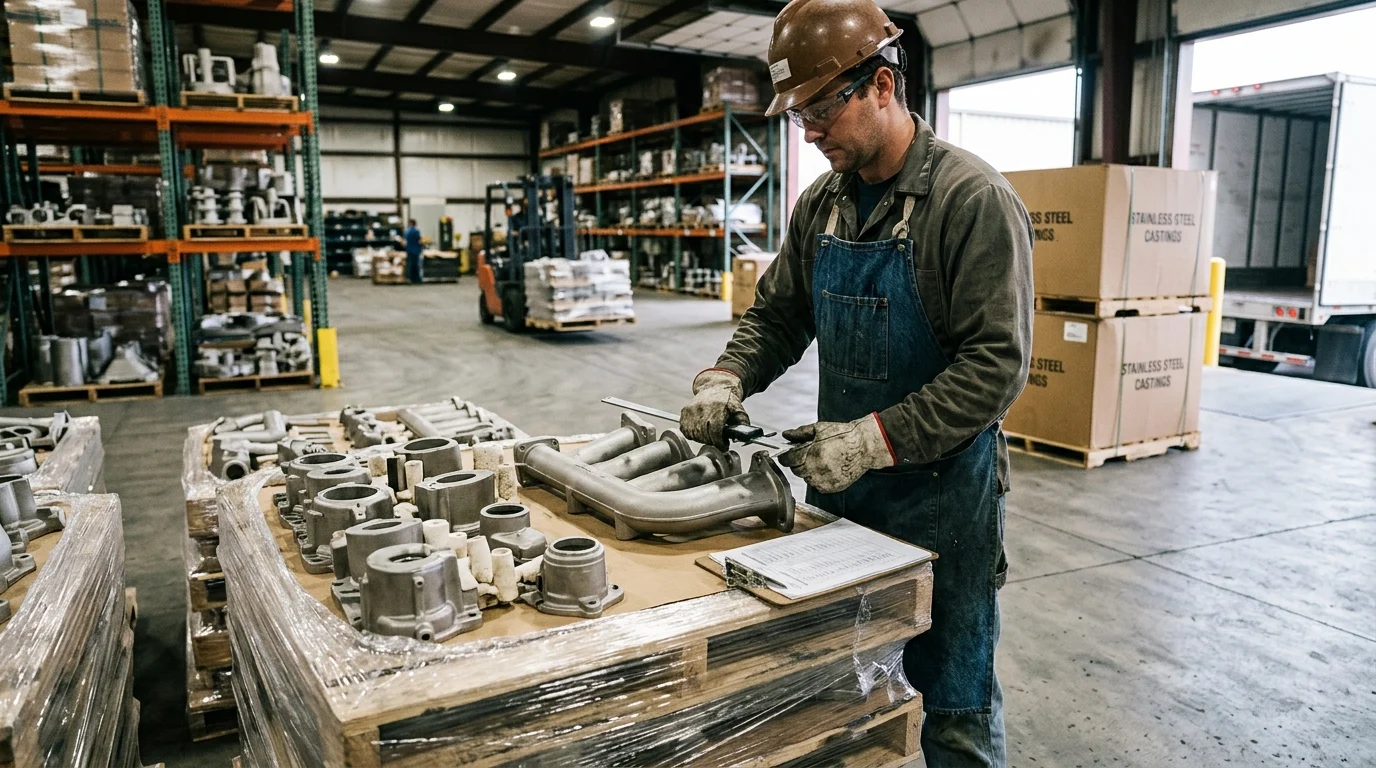
Eliminating voids requires a highly systematic approach to process control throughout the entire investment casting lifecycle. By meticulously manipulating thermodynamic and fluid dynamic variables, foundries can optimize the solidification pathway, ensure continuous feeding, and minimize the risk of gas entrainment.
How Alloy, Melting, Shell Design, and Gating Affect Porosity
The delicate interplay between alloy composition, melting parameters, shell design, and the gating system fundamentally dictates the final casting density. For grades like 316L or 17-4PH, pouring temperatures must be strictly controlled, typically within a narrow operational band of 1580°C to 1620°C. Excessive superheat exponentially increases gas solubility and degrades the ceramic shell’s structural integrity, while insufficient temperature leads to premature freezing and misruns. Gating design is equally critical; the thermal modulus of the riser must be at least 1.2 times the modulus of the casting section it feeds to guarantee directional solidification. Furthermore, optimizing shell permeability—often by adjusting the particle size distribution of the secondary stucco layers—allows trapped atmospheric and combustion gases to escape ahead of the advancing metal front, thereby preventing spherical gas defects. Proper deoxidation practices, such as the calculated addition of ferrosilicon or manganese prior to pouring, also play a vital role in scavenging dissolved oxygen.
Process Controls, Inspection Points, and Corrective Actions
Robust process controls and strategic inspection points are absolutely necessary to sustain low porosity rates across high-volume production runs. Advanced foundries frequently employ vacuum induction melting (VIM) or utilize argon gas shielding during the pouring sequence to prevent atmospheric gas absorption into the molten steel. Shell preheating temperatures, generally maintained between 900°C and 1050°C, must be continuously monitored via pyrometers to prevent thermal shock and control the cooling gradient. Corrective actions rely heavily on real-time data extracted from inspection points. If dye penetrant testing (PT) or X-ray inspections reveal recurring shrinkage in a specific lot, engineers must iteratively adjust the gating ratio—such as shifting from a standard 1:2:2 to a restrictive 1:2:1.5 choke configuration—to purposefully alter the fluid velocity and pressure dynamics within the mold cavity.
How to Choose a Porosity-Control Strategy
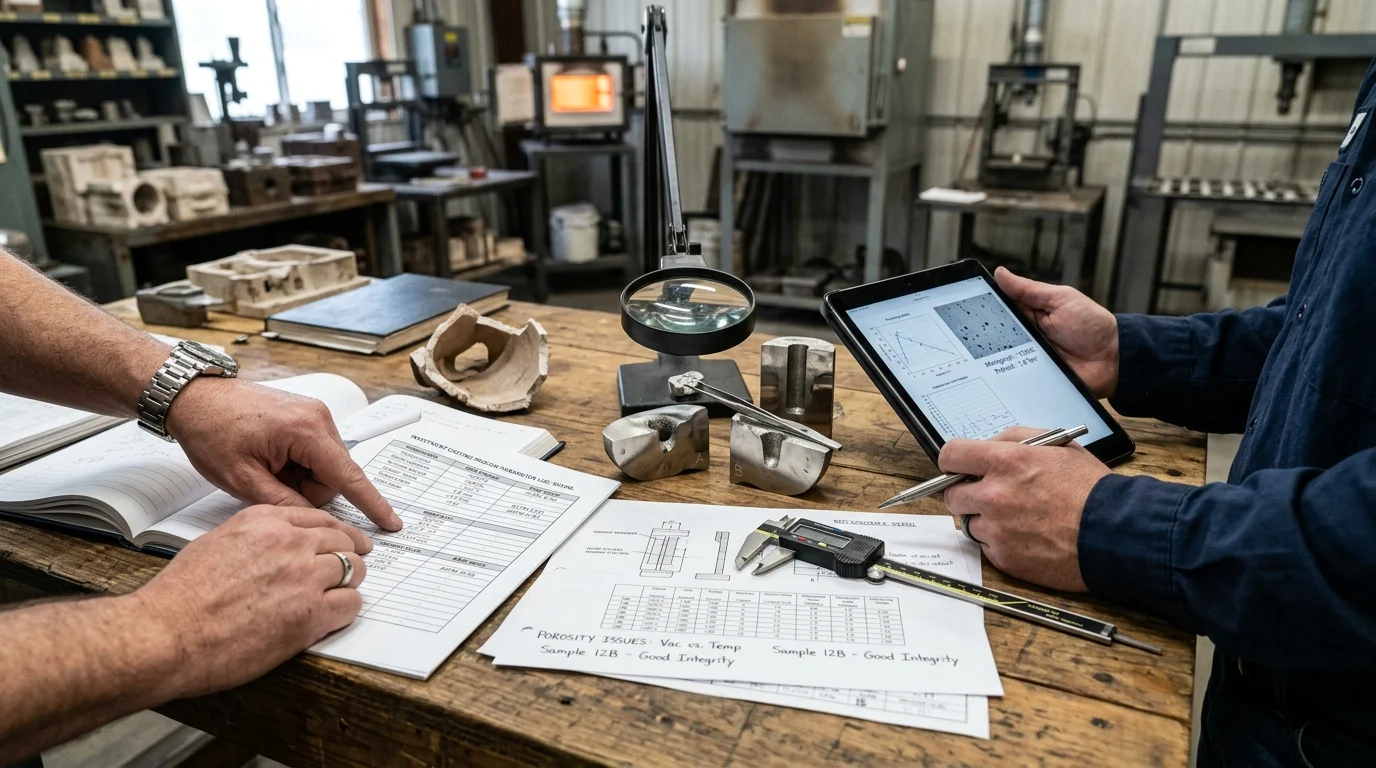
Achieving absolute zero porosity is often technically feasible but economically impractical for many commercial-grade components. Therefore, metallurgical engineers and procurement teams must balance stringent quality requirements against overarching production costs, raw material yield rates, and manufacturing lead times.
Trade-Offs Between Yield, Machining Allowance, and Cycle Time
The most direct metallurgical method to eliminate shrinkage porosity is to increase the riser size or add supplementary gating, which substantially enhances liquid metal feeding during the critical liquid-to-solid contraction phase. However, this strategy inherently reduces the overall casting yield, sometimes dropping the metal utilization rate from an efficient 60% down to a costly 45%. This reduction directly increases remelting costs, energy consumption, and environmental impact. Alternatively, foundries can specify a larger initial machining allowance to physically cut away surface and sub-surface porosity, though this extends CNC machining cycle times and tool wear. For high-value aerospace or medical implant components where zero porosity is mandated, Hot Isostatic Pressing (HIP) is routinely employed. The HIP process subjects the finished casting to elevated temperatures (often exceeding 1100°C) and inert argon gas pressures up to 100 MPa, effectively collapsing and diffusion-bonding internal voids, albeit at a significant cost premium that must be factored into the unit price.
A Decision Framework Based on Defect Data and Part Requirements
Developing a robust porosity-control framework requires mathematically correlating historical defect data with specific end-use part requirements.
Key Takeaways
- The most important conclusions and rationale for stainless steel investment casting
- Specs, compliance, and risk checks worth validating before you commit
- Practical next steps and caveats readers can apply immediately
Frequently Asked Questions
What mainly causes porosity in stainless steel investment castings?
The two main causes are gas entrapment and shrinkage during solidification. Common triggers include shell moisture, dissolved gases, hot spots, and poor feeding in thick sections.
How can pouring temperature help reduce porosity?
Keep pouring temperature within the alloy’s control window. For grades like 316L or 17-4PH, excessive superheat increases gas pickup, while low temperature can cause premature freezing and shrinkage defects.
Why does gating and riser design matter for porosity control?
Proper gating and risers promote directional solidification and continuous feeding. A riser modulus about 1.2 times the section it feeds helps reduce shrinkage porosity in heavier areas.
How can shell quality affect gas porosity?
Wet or low-permeability ceramic shells can trap gases and create spherical pores. Controlling shell drying, permeability, and stucco particle size helps gases escape before metal fully solidifies.
How is porosity usually checked in stainless steel investment casting parts?
Radiographic testing is commonly used to detect internal porosity and compare severity against standards such as ASTM reference radiographs. It is especially important for pressure-tight or high-reliability components.