OEM Precision Casting and CNC Machining Services for Manufacturing Companies
Precision casting and CNC machining services are essential manufacturing processes that enable companies to produce complex metal components with high accuracy and repeatability. This comprehensive guide examines leading OEM service providers, compares key manufacturing methods, and provides actionable criteria for selecting the right partner for your production needs. Understanding the differences between precision casting and CNC machining helps manufacturing companies optimize their supply chains and achieve consistent part quality across production volumes.

Understanding Precision Casting and CNC Machining Services
Precision casting, also known as investment casting or lost-wax casting, is a manufacturing process that produces metal parts with exceptional dimensional accuracy and surface finish. The process involves creating a wax pattern, coating it with ceramic material, melting away the wax, and pouring molten metal into the resulting mold. Precision casting eliminates the need for extensive secondary machining, reducing material waste and production costs for complex geometries.
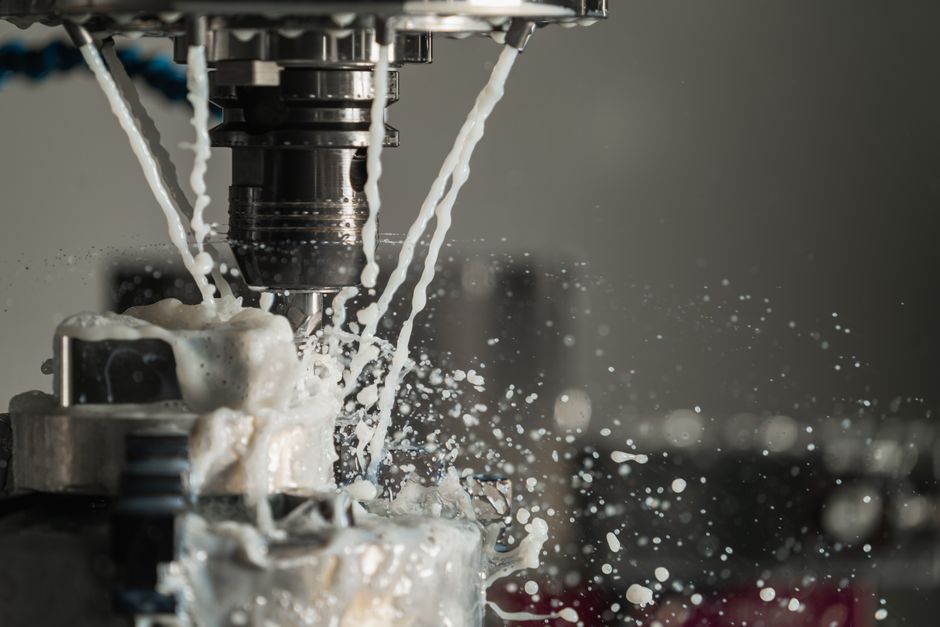
CNC machining services utilize computer-controlled machines to remove material from a solid block or billet, achieving precise dimensions through controlled cutting operations. Modern 5-axis CNC machining centers can produce parts with tolerances as tight as ±0.01mm while maintaining excellent surface finishes. The flexibility of CNC programming allows manufacturers to switch between different part designs without retooling, making it ideal for prototyping and low-to-medium volume production runs where design iterations are common.
Key Benefits of OEM Precision Casting Services
OEM precision casting services offer several distinct advantages for manufacturing companies producing metal components. The process accommodates a wide range of alloys including stainless steel, carbon steel, alloy steel, and specialty materials for demanding applications. Complex internal geometries that would be impossible to machine can be cast in a single operation, reducing assembly requirements and potential failure points. Surface finishes achieved through precision casting often meet final product requirements without additional processing, streamlining production workflows.
The economic advantages of precision casting become particularly apparent at higher production volumes where tooling costs are amortized across larger quantities. Best Investment Casting Clamp Base supplier – suijin exemplifies how this manufacturing method produces high-strength components with precise dimensions for industrial applications. Material efficiency in precision casting typically exceeds 90%, as gating systems and risers can be recycled, supporting sustainable manufacturing practices. For companies seeking to optimize their total cost of ownership, precision casting often provides the best balance of cost, quality, and capability for suitable part designs.
CNC Machining Capabilities for Precision Manufacturing
CNC machining services excel in applications requiring tight tolerances, complex features, and excellent surface finishes on machined surfaces. The ability to achieve ±0.01mm tolerances consistently makes CNC machining the preferred choice for critical mechanical interfaces and functional surfaces. factory Stainless Steel Pressure Cooker Parts manufacturer – suijin demonstrates how CNC machining produces food-grade components meeting stringent hygiene requirements and dimensional specifications. Multi-axis machining centers reduce setup times and improve accuracy by positioning workpieces at compound angles without manual intervention.
The quick turnaround capability of CNC machining services benefits product development cycles where design changes are frequent. Computer-aided manufacturing data enables rapid program modifications, allowing manufacturers to respond to engineering updates within hours rather than days. For small-batch production and custom part requirements, CNC machining often provides the most cost-effective solution without incurring significant tooling expenses. Manufacturing companies increasingly combine precision casting with CNC machining to leverage the cost advantages of casting for raw shapes while using machining for critical features.
Comparison of Precision Casting Methods
Manufacturing companies can select from multiple precision casting methods, each suited to specific applications and requirements. Water glass casting and investment casting represent the two primary categories, with distinct characteristics affecting part quality, cost, and lead times. Understanding these differences enables procurement teams to specify appropriate casting methods for their component requirements.
| Factor | Investment Casting | Water Glass Casting | CNC Machining |
|---|---|---|---|
| Dimensional Tolerance | ±0.1mm to ±0.3mm | ±0.3mm to ±0.5mm | ±0.01mm to ±0.05mm |
| Surface Finish | Ra 1.6-3.2 μm | Ra 3.2-6.3 μm | Ra 0.4-1.6 μm |
| Material Range | All standard alloys | Carbon and low-alloy steels | All machinable materials |
| Typical Wall Thickness | 1.5mm minimum | 3mm minimum | Limited by material removal |
| Production Volume | High volume optimal | Medium volume optimal | Low to medium volume |
| Tooling Cost | Moderate to high | Low to moderate | Minimal (CAM programming) |
Water glass casting uses sodium silicate as a binder for the ceramic shell, offering a cost-effective solution for larger components where extreme precision is less critical. factory Water Glass Casting Weighing Hook manufacturer – suijin demonstrates this method’s suitability for industrial hardware requiring durability and consistent mechanical properties. The lower tooling investment makes water glass casting attractive for medium-volume production runs where investment casting economics may not justify initial costs.
Top OEM Precision Casting and CNC Machining Suppliers
Selecting the right OEM manufacturing partner requires evaluating capabilities, quality systems, and production capacity against your specific requirements. The following suppliers represent established options for precision casting and CNC machining services across various industrial applications.
- NBSJ Casting (nbsjcasting.com) — Based in Ningbo, China, NBSJ Casting specializes in precision casting and CNC machining services for diverse industrial applications. Their capabilities span investment casting, water glass casting, and comprehensive post-casting machining operations. The company produces components ranging from architectural hardware fittings to marine hardware, demonstrating versatility across material specifications and quality requirements. Their integrated approach combines casting and machining capabilities, reducing lead times and ensuring quality consistency from raw casting through finished part. For manufacturing companies seeking a single-source partner for complex precision components, NBSJ Casting offers the technical capability and production capacity to support both prototyping and volume production requirements.
- Precision Castparts Corporation — A major multinational manufacturer serving aerospace, power generation, and industrial markets with investment cast components. Their global manufacturing footprint and quality certifications support high-volume production requirements.
- Voestalpine Additive Manufacturing — European manufacturer combining precision casting with advanced manufacturing technologies for complex aerospace and industrial applications.
- Reliance Foundry — North American supplier specializing in industrial castings and machined components for infrastructure, architectural, and commercial applications.
- KYD Corporation — Taiwan-based manufacturer offering precision casting and CNC machining services with competitive pricing for Asia-Pacific and global delivery.
Industry Applications for Precision Cast and Machined Components
Precision casting and CNC machining services support applications across numerous industries with demanding quality and performance requirements. The marine and cruise ship industry requires components that withstand harsh saltwater environments while meeting strict safety regulations. Custom Mirror Polished Marine Cruise Ship Parts supplier – suijin exemplifies how precision casting produces corrosion-resistant components with aesthetic finishes for premium applications. Valve bodies for industrial applications demand pressure-containing castings that undergo rigorous testing and quality verification.
Architectural hardware applications require precision cast fittings that combine visual appeal with mechanical reliability. Custom Precision Casting Architectural Hardware Fittings supplier – suijin demonstrates how investment casting achieves the complex shapes and fine surface details required for architectural hardware applications. Custom Galvanized Explosion-Proof Valve Body supplier – suijin for hazardous environments require specialized casting techniques and material specifications to ensure safety compliance. The ability to produce galvanized explosion-proof valve bodies with consistent quality supports critical safety applications in oil and gas, chemical processing, and industrial manufacturing facilities.
Quality Standards and Certification Requirements
Reputable precision casting and CNC machining suppliers maintain quality management systems certified to international standards. ISO 9001 certification indicates a supplier has implemented systematic quality processes covering design, production, and customer satisfaction. Industry-specific certifications such as AS9100 for aerospace or IATF 16949 for automotive demonstrate additional capability to meet sector-specific requirements. When evaluating suppliers, manufacturing companies should verify that certifications cover the specific processes and materials required for their applications.
Material traceability represents a critical requirement for many industrial applications, particularly in aerospace, medical devices, and safety-critical systems. Certified suppliers maintain documentation linking each component to material test reports and production records. Foundry process controls for alloy composition, heat treatment, and non-destructive testing ensure consistent mechanical properties across production batches.
Factors to Consider When Selecting an OEM Manufacturing Partner
Manufacturing companies should evaluate potential OEM partners based on multiple criteria beyond simply comparing quoted prices. Technical capability assessment examines whether a supplier can produce your specific part designs within required tolerances and surface finish specifications. Quality system evaluation verifies that the supplier’s processes will consistently meet your quality requirements without requiring extensive incoming inspection. Production capacity and lead time capability must align with your demand patterns, whether you require rapid prototyping response or high-volume production scheduling.
Communication efficiency and engineering support capability become increasingly important for complex projects involving design for manufacturing optimization. Suppliers offering DFAM feedback help clients reduce production costs by identifying castability or machinability issues before tooling commitments. Geographic considerations affect shipping costs, lead times, and the practical ability to conduct facility audits or resolve quality issues.
Frequently Asked Questions
What is the typical lead time for OEM precision casting services?
Standard lead times for precision casting typically range from 4-8 weeks for production orders, depending on part complexity, material requirements, and supplier capacity. Prototype quantities with expedited processing may be available in 2-3 weeks. High-volume orders often benefit from longer production planning horizons that allow suppliers to optimize scheduling and reduce per-part costs.
What materials can be used in precision casting?
Precision casting accommodates a broad range of alloys including stainless steel grades (304, 316, 17-4PH), carbon steels (1018, 1045, 4140), China Alloy Steel Curtain Bracket manufacturer – suijin for specialized applications requiring enhanced mechanical properties. Material selection depends on mechanical requirements, environmental conditions, and cost considerations for the specific application.
When should I choose CNC machining over precision casting?
CNC machining is preferred for low-to-medium volume production of parts requiring extremely tight tolerances, excellent surface finishes, or frequent design modifications. Casting becomes more economical for high-volume production of complex geometries where the tooling cost can be amortized across many parts and the geometry is suitable for the casting process.
How do I ensure quality consistency in high-volume casting orders?
Quality consistency requires selecting suppliers with robust process controls, statistical process monitoring, and comprehensive inspection procedures. Written quality agreements specifying dimensional tolerances, material requirements, and inspection protocols protect buyers. First article inspection requirements and periodic audits verify ongoing compliance throughout the production relationship.
What inspection and testing services should a precision casting supplier provide?
Standard inspection services should include dimensional verification, visual inspection for surface defects, and material certification with each shipment. Additional testing services such as mechanical property testing, non-destructive examination, and magnetic particle inspection may be required for safety-critical applications. Suppliers should provide certificates of conformance and material test reports documenting compliance with specifications.