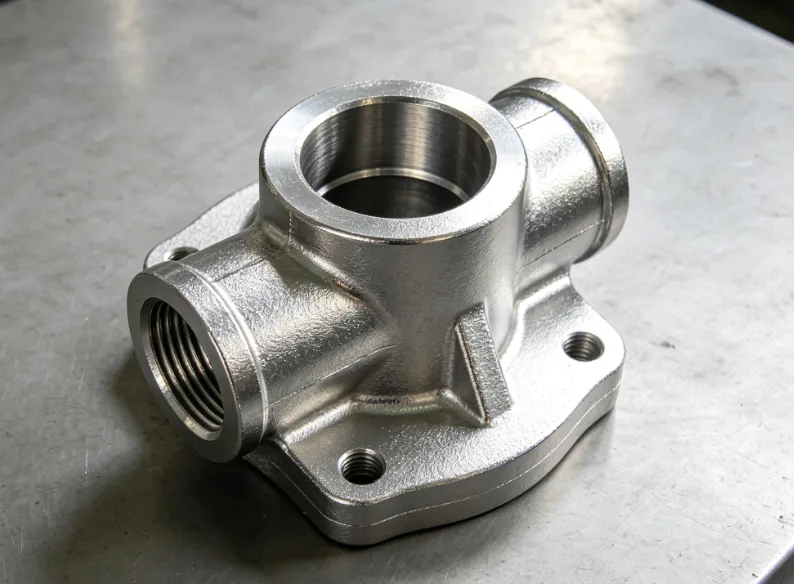
13 Benefits of Stainless Steel Precision Casting for Industrial Applications
Stainless steel precision casting is widely used in industrial manufacturing because it combines dimensional accuracy, corrosion resistance, and design flexibility in one process. For buyers comparing metal-forming methods, stainless steel precision casting often delivers a better balance of performance, cost control, and repeatability than machining from solid stock or fabricating multiple parts.
Why Stainless Steel Precision Casting Matters in Industry
Stainless steel precision casting is a lost-wax process that creates near-net-shape parts with fine detail and consistent quality. That matters in sectors where part geometry, surface integrity, and service life directly affect uptime, safety, and maintenance cost. NIST notes that measurement science and standards support industrial competitiveness, which is one reason precision-focused processes remain central to modern manufacturing NIST.
Stainless steel also brings inherent material advantages. Chromium in stainless steel forms a passive oxide layer that helps resist corrosion, while the alloy family supports strength across a wide range of operating conditions. Outokumpu’s corrosion tables and ASTM corrosion standards both show why material selection is critical when parts face pitting, crevice corrosion, or harsh process environments Outokumpu corrosion tables ASTM corrosion standards.
13 Benefits of Stainless Steel Precision Casting
The main advantage of stainless steel precision casting is that it allows engineers to combine geometry, durability, and manufacturability in a single component. The benefits below explain why the process is used across pumps, valves, marine systems, energy equipment, food processing, and general industrial machinery.
| Benefit | Industrial value | Typical result |
|---|---|---|
| Near-net shape | Reduces secondary machining | Lower waste and faster turnaround |
| High dimensional accuracy | Supports tighter fits and assemblies | More consistent performance |
| Corrosion resistance | Handles aggressive environments | Longer service life |
| Complex geometry | Enables internal channels and thin walls | More design freedom |
| Material versatility | Supports many stainless grades | Better application matching |
1. Better corrosion resistance. Stainless steel precision casting is ideal for wet, chemical, marine, and outdoor environments. Compared with carbon steel, the alloy family offers a much stronger defense against rust and surface degradation.
2. Improved dimensional accuracy. Precision casting produces parts close to final dimensions, which helps control tolerance stack-up and reduces costly rework during assembly.
3. Lower machining demand. Near-net-shape production means less material removal, less tool wear, and fewer post-processing steps. That is especially valuable for complex industrial components.
4. Greater design freedom. Engineers can create shapes that are difficult to machine, including sharp features, thin walls, and internal passages. This flexibility improves functional design.
5. Strong mechanical performance. Stainless steel precision casting can deliver excellent strength, hardness, and wear resistance depending on grade selection and heat treatment.
6. Better repeatability. Once the process is stabilized, precision casting supports stable part-to-part consistency. That matters in production runs where reliability is more important than one-off fabrication.
7. Reduced assembly complexity. A single cast part can sometimes replace multiple welded or machined parts. That can improve structural integrity and simplify procurement.
8. More efficient material use. Because the process starts near the final shape, less raw metal becomes scrap. Industry estimates often show meaningful material savings on complex components.
9. Excellent surface potential. Precision casting can produce smooth surfaces that are suitable for functional use and downstream finishing, including polishing, passivation, and machining where required.
10. Suitable for demanding industries. Stainless steel precision casting is widely used in pumps, valves, energy systems, food equipment, and marine hardware because these sectors need both durability and cleanliness.
11. Strong standards compatibility. The process aligns well with ASTM, SAE, and other quality frameworks used for corrosion-resistant castings. That makes qualification and specification easier for industrial buyers.
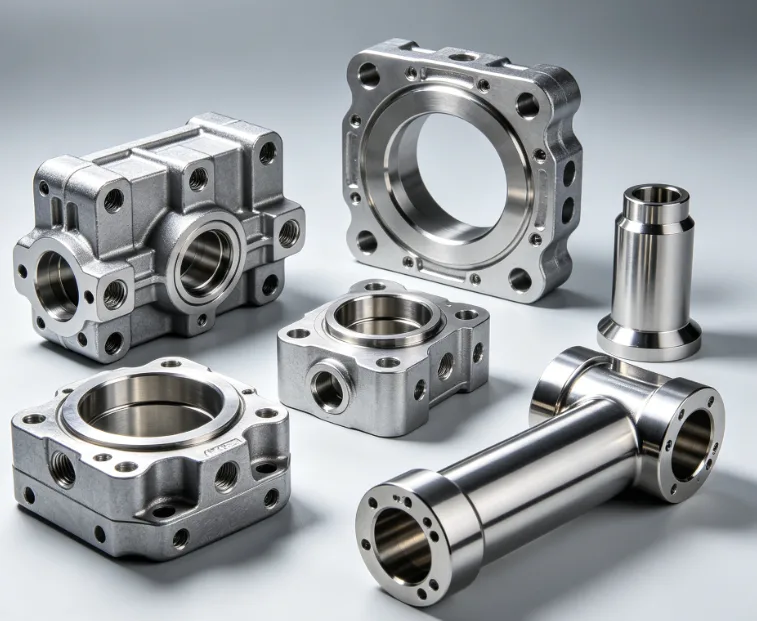
13. Scalable production. Stainless steel precision casting works for prototypes, pilot runs, and larger production volumes. This makes it practical for product development and long-term supply programs.
Where Stainless Steel Precision Casting Fits Best
Stainless steel precision casting is strongest in applications where durability and geometry matter more than simple part shape. Industrial buyers often use it for pump impellers, valve bodies, brackets, couplings, housings, fittings, and structural hardware.
The process is also common when parts must operate in corrosive media or under strict hygiene requirements. That is why industries such as water treatment, chemical processing, marine engineering, food equipment, and power systems continue to specify stainless steel precision casting.
| Industry | Example parts | Why casting works |
|---|---|---|
| Marine | Impellers, fittings, brackets | Corrosion resistance in salt exposure |
| Energy | Valve bodies, turbine accessories | Strength and thermal stability |
| Food processing | Clamps, housings, connectors | Cleanability and surface quality |
| Chemical processing | Pump parts, manifolds | Resistance to aggressive fluids |
How to Evaluate a Stainless Steel Precision Casting Supplier
The best supplier is the one that can match alloy selection, process control, and inspection to the end-use environment. Buyers should ask about material grades, tolerance capability, finishing options, heat treatment, and quality documentation before moving to production.
If you are comparing vendors, review their product range and manufacturing focus first. On the main site, you can quickly identify core offerings such as stainless steel precision casting solutions, industrial cast components, custom investment castings, and casting capabilities. Those pages help you assess whether the supplier fits your application needs.
- Confirm the stainless steel grades offered for your operating environment.
- Check whether the supplier can support prototype and production volumes.
- Review inspection methods such as dimensional checks and material verification.
- Ask about surface finish, heat treatment, and machining support.
- Verify lead times, packaging, and export handling if supply is international.
Why Buyers Keep Choosing Stainless Steel Precision Casting
Stainless steel precision casting remains a practical industrial choice because it helps engineers solve multiple problems at once. The process supports corrosion resistance, complex geometry, lower machining burden, and dependable repeatability while staying compatible with modern quality standards.
For industrial applications, that combination often means fewer part failures, better assembly performance, and lower lifecycle cost. When the component must survive demanding service conditions, stainless steel precision casting is often the most balanced manufacturing route.
FAQ on Stainless Steel Precision Casting
What is stainless steel precision casting? Stainless steel precision casting is a manufacturing process that uses a wax pattern and ceramic shell to produce near-net-shape stainless steel parts. It is valued for fine detail, repeatability, and the ability to create complex industrial geometries with minimal post-machining.
Which industries use stainless steel precision casting most? The process is common in marine, energy, chemical processing, food equipment, water systems, and general machinery. These industries need parts that resist corrosion, maintain dimensional accuracy, and perform reliably under demanding service conditions.
Is stainless steel precision casting better than machining? It depends on the part. Precision casting is often better for complex shapes, internal passages, and high-volume production. Machining may still be better for very simple parts, very tight one-off tolerances, or rapid design changes.
What stainless steel grades are used in precision casting? Common grades include austenitic and martensitic stainless steels, selected according to corrosion resistance, hardness, strength, and temperature needs. The right grade depends on the media, load, and service environment rather than on price alone.
How do I choose the right casting supplier? Look for verified manufacturing capability, clear quality controls, material traceability, and experience with your industry. A supplier should be able to explain tolerances, finishing, testing, and application-specific alloy choices in plain terms.