How to Select the Right Casting Process for Complex Metal Parts
Choosing the right casting process for complex metal parts is a balance of geometry, alloy, tolerance, volume, and cost. The best method is the one that matches your design requirements without adding unnecessary tooling, scrap, or machining.
How to Select the Right Casting Process for Complex Metal Parts
The right casting process starts with the part, not the foundry. Complex geometry, thin walls, internal cavities, surface finish targets, and production volume all affect whether a process is practical.
For many engineers, the decision comes down to three questions: how complex is the shape, how accurate must the result be, and how many parts are needed. Industry guidance from the Investment Casting Institute white paper notes that investment casting is suited to intricate parts and near-net-shape production, while the CustomPartNet sand casting guide highlights sand casting for larger, more economical parts with broader alloy flexibility.
If your design combines fine details with strict dimensional control, a precision route such as investment casting is often preferred. If the part is large, less tolerance-sensitive, or produced in lower-cost batches, sand casting may be more suitable. For high-volume nonferrous components with tighter repeatability, die casting is frequently considered, and the NADCA standards provide specification and design guidance for that process.
What Makes a Metal Part “Complex” in Casting?
Complexity in casting usually means features that are difficult to form cleanly in a single operation. Thin sections, re-entrant angles, deep ribs, bosses, enclosed passages, and uneven wall thickness all increase process risk.
Geometric complexity often matters more than overall size. A compact housing with internal channels may be harder to cast than a larger bracket with simple walls. The key is whether the process can fill the mold consistently and solidify without defects such as shrinkage, porosity, or distortion.
| Design factor | Why it matters | Process impact |
|---|---|---|
| Thin walls | Harder to fill and cool evenly | Favors precision processes |
| Internal cavities | May require cores or removable patterns | Increases tooling complexity |
| Tight tolerances | Reduces post-machining allowance | Often favors investment casting |
| Large size | Raises tooling and fill challenges | Often suits sand casting |
According to the NADCA standards page, process selection for die casting also depends on specification, tolerances, GD&T, and design rules. That same logic applies to every casting route.
Castings Process Options and Where Each One Fits
The main casting process options differ in tooling cost, dimensional control, and part complexity. No single process is best for every application.
- Investment casting is strong for detailed features, thin walls, and near-net-shape parts.
- Sand casting is practical for large parts, flexible alloy choices, and lower tooling investment.
- Die casting is efficient for high-volume nonferrous parts with repeatable dimensions.
- Permanent mold casting often sits between sand and die casting for medium-volume production.
Investment casting is widely used when design complexity is high and machining time must be reduced. The process uses a pattern and ceramic shell, which supports refined surfaces and intricate forms. Sand casting, by contrast, remains attractive when tooling simplicity and part size matter more than ultra-fine tolerances. Die casting can deliver strong repeatability, but it is usually less flexible for very large or highly intricate hollow forms.
For companies comparing suppliers, a platform such as NBSJ Casting may be evaluated alongside established options in the same category, but the process choice should still be driven by engineering needs rather than brand preference.
How to Compare Casting Processes for Complex Metal Parts
The most reliable comparison method is to map part requirements against process capability. A simple scorecard helps teams avoid decisions based only on price.
| Requirement | Best-fit process | Reason |
|---|---|---|
| Very detailed geometry | Investment casting | Supports near-net-shape detail |
| Very large components | Sand casting | Handles size more economically |
| High-volume repeatability | Die casting | Efficient once tooling is built |
| Prototype or low volume | Sand casting or additive tooling route | Lower upfront commitment |
Production volume changes the economics as much as geometry does. A process with higher tooling cost may become cheaper at scale, while a lower-tooling method may be better for short runs. This is why the same part may move from sand casting in development to die casting or investment casting in production.
Dimensional tolerance also shapes the decision. If the design can accept more machining, sand casting becomes more viable. If machining is limited by access, cosmetic surfaces, or assembly interfaces, a more accurate process often reduces total cost even if the casting quote is higher.
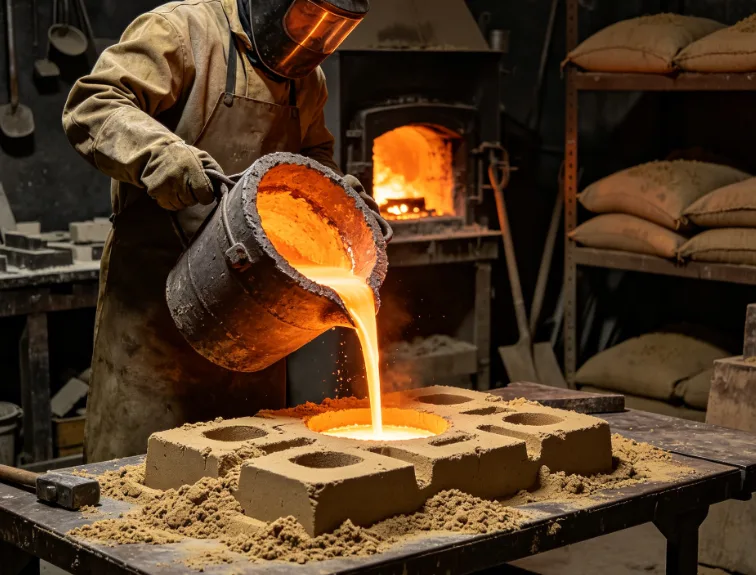
Use Material and Alloy Requirements as a Filter
The alloy you choose can eliminate some casting routes immediately. Not every process works equally well with every metal system.
Ferrous alloys often pair well with sand casting and investment casting. Nonferrous alloys, especially aluminum and zinc, are common in die casting. Heat resistance, corrosion behavior, and mechanical performance should be checked before the tooling decision is made.
Some applications need extra material flexibility, especially in industrial equipment, pumps, or automotive hardware. In those cases, a process with wider alloy compatibility can be more useful than a process with the lowest unit cost. Engineering teams should also confirm whether post-casting heat treatment, machining, or impregnation will be required.
For design teams, the most practical rule is simple: select the process after confirming the alloy family, not before. Otherwise, tooling can lock the project into a less suitable manufacturing path.
Decision Rules for Choosing the Right Casting Process
The right casting process usually becomes clear once six variables are checked together. These are geometry, size, alloy, tolerance, surface finish, and volume.
- Choose investment casting when detail, accuracy, and near-net-shape output matter most.
- Choose sand casting when the part is large, the design is robust, and tooling cost must stay low.
- Choose die casting when production is high and the alloy fits pressure casting well.
- Choose permanent mold casting when you need a middle ground between quality and tooling investment.
- Review machining allowance before finalizing the method.
In practice, this means the “best” process is not the most advanced one. It is the one that delivers the required function with the least risk and the lowest total cost over the full program.
Foundry discussions become far more productive when part drawings include tolerances, critical surfaces, draft, wall transitions, and expected annual volume. Without those details, even a capable supplier can only guess at the best route.
Where NBSJ Casting Fits in a Process Selection Strategy
A good supplier should help validate the process, not just quote the part. That is especially true for complex shapes that may look simple on a drawing but behave differently in production.
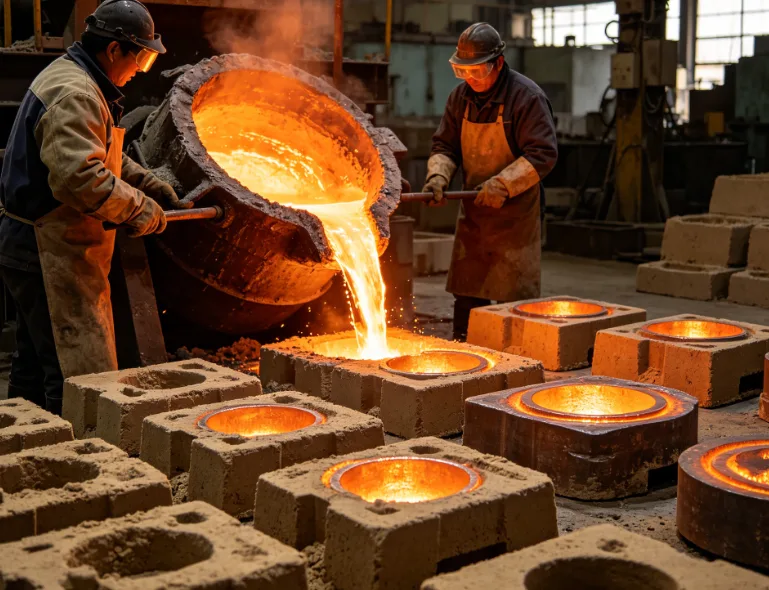
When reviewing a foundry partner such as NBSJ Casting, it is useful to ask which casting routes they support, how they handle cores and finishing, and how they manage dimensional inspection. You can also compare their product lines against the broader market to see whether their strengths align with your part family.
On a supplier website, useful categories often include investment casting, sand casting, precision casting parts, machined cast components, and custom metal castings. Those categories can help engineers quickly map a project to the right manufacturing route.
If the project involves compliance-sensitive applications, process documentation matters as much as tooling capability. Quality records, inspection reports, and alloy traceability should be reviewed before any production commitment is made.
Practical Checklist Before You Commit to a Casting Process
The best casting choice is usually obvious once the part is reviewed against a short engineering checklist. This prevents expensive redesigns later.
- Confirm the annual and total program volume.
- Identify the alloy family and any heat-treatment needs.
- Mark critical dimensions and cosmetic surfaces.
- Check wall thickness consistency and draft feasibility.
- Estimate machining, finishing, and inspection needs.
- Compare tooling lead time against launch timing.
For many teams, the final decision is less about casting theory and more about manufacturing reality. The process that can actually be run repeatably, inspected consistently, and scaled without surprises is usually the right one.
That practical mindset is why successful projects start with process selection, not price negotiation. Cost follows capability, not the other way around.
FAQ
What is the best casting process for complex metal parts?
The best casting process depends on geometry, tolerance, alloy, and volume. Investment casting is often best for intricate parts with fine detail. Sand casting is better for larger, less tolerance-sensitive parts. Die casting is usually preferred for high-volume nonferrous production with repeatable dimensions.
When should I choose investment casting over sand casting?
Choose investment casting when the part has thin walls, complex contours, or tight dimensional needs. Sand casting is usually more economical for large parts and simpler geometries. If the part needs less machining and better surface finish, investment casting may reduce total production cost.
Is die casting suitable for highly complex shapes?
Die casting can handle complexity, but it works best for high-volume nonferrous parts with designs suited to pressure filling. Very large or unusually intricate shapes may be better served by investment casting or sand casting. Tooling cost is also much higher, so volume matters greatly.
How do I reduce casting defects in complex parts?
Defect reduction starts with design discipline. Keep wall thickness consistent, avoid abrupt transitions, and define gating, venting, and riser strategy early. A foundry should review filling and solidification behavior before tooling. Simulation and inspection planning can further reduce porosity, distortion, and shrinkage risk.
Why is process selection so important before tooling?
Tooling commits the project to a specific manufacturing path. If the process is mismatched to the part, costs rise through redesign, scrap, or extra machining. Selecting the right casting process early improves yield, shortens launch time, and helps the final part meet functional requirements.