Introduction
Selecting a casting supplier is less about unit price than about controlling hidden failure modes that can surface after machining, assembly, or field use. For OEM buyers, the real challenge is identifying which foundries can consistently hold process discipline, material integrity, and dimensional stability at production scale. This article explains how experienced sourcing teams evaluate casting suppliers to reduce porosity, alloy variation, tooling issues, and late-stage defects before they become cost or warranty problems. It also outlines the practical signals of a qualified supplier, helping readers connect procurement decisions with downstream quality, machining efficiency, and long-term product reliability.
Why Casting Supplier Selection Matters for OEMs
For Original Equipment Manufacturers (OEMs), the integrity of a final assembled product relies heavily on the quality of its foundational components. Partnering with the right foundry is a strategic manufacturing imperative because casting defects often remain hidden beneath the surface until the costly machining or final assembly phases. Discovering subsurface porosity or hard spots late in the production cycle can inflate overall manufacturing costs by 15% to 25%, while simultaneously accelerating wear on expensive CNC cutting tools. This highlights exactly why rigorous evaluation protocols and a formalized approach to supplier vetting are essential for long-term profitability.
Common Quality Risks in Supplier Selection
Substandard foundries often struggle with strict process control, leading to common metallurgical defects such as shrinkage cavities, non-metallic inclusions, and gas porosity. When procurement buyers prioritize rock-bottom piece prices over demonstrable process capability, they risk encountering severe dimensional variations that disrupt automated machining lines and force costly manual interventions. Furthermore, unverified sub-tier material sourcing can result in subtle alloy deviations that compromise the tensile strength, yield strength, and fatigue life of the final component. If these substandard parts reach the end-user, they expose the OEM to severe liability, catastrophic field failures, and multimillion-dollar warranty claims.
How OEM Teams Define a Qualified Casting Supplier
A highly competent vendor is defined by robust quality management systems and transparent, verifiable operational metrics. OEM procurement and engineering teams typically require stringent baseline certifications, such as ISO 9001:2015 for general manufacturing or IATF 16949 specifically for automotive applications. Beyond these standard certifications, a qualified facility must demonstrate stable capacity utilization—often operating optimally at 75% to 80% to comfortably absorb sudden demand spikes without rushing production. They must also maintain clear, mutually beneficial policies regarding Minimum Order Quantities (MOQs) and acceptable scrap allowances. Proper casting supplier selection ensures that the chosen foundry aligns perfectly with both the technical demands and the commercial maturity of the OEM.
How OEM Buyers Should Evaluate Casting Suppliers

Moving beyond initial desktop qualifications, evaluating a foundry requires a deep, methodical dive into their specific manufacturing processes, technological investments, and overall supply chain resilience. Buyers must calculate the Total Cost of Ownership (TCO), which rigorously factors in tooling maintenance, expedited freight risks, and internal quality control overhead, rather than focusing solely on the raw unit price.
Key Comparison Criteria Across Casting Processes
Different manufacturing methods dictate entirely distinct tolerance capabilities, upfront tooling costs, and maximum production speeds. Evaluating a potential partner requires understanding exactly how their specific in-house process aligns with the component’s unique design specifications and lifecycle volume. For instance, a foundry specializing only in sand casting may struggle to meet the tight tolerances required for aerospace valves, whereas a high-pressure die casting facility requires massive upfront tooling investments that only make sense for volumes exceeding 10,000 units annually.
| Casting Process | Typical Tolerance (mm) | Tooling Cost | Surface Finish (Ra) | Defect Risk |
|---|---|---|---|---|
| Sand Casting | ± 0.8 to ± 3.2 | Low to Medium ($2k-$10k) | 12.5 to 25 | High (Porosity, Inclusions) |
| Investment Casting | ± 0.13 to ± 0.4 | High ($5k-$25k) | 1.6 to 3.2 | Low (Highly controlled) |
| High-Pressure Die Casting | ± 0.05 to ± 0.2 | Very High ($20k-$100k+) | 0.8 to 1.6 | Medium (Air entrapment) |
Matching the component’s geometric complexity and annual volume requirements to the right metallurgical process is the cornerstone of effective risk mitigation.
Compliance, Traceability, and Logistics Factors
Material traceability is non-negotiable for critical structural components utilized in the heavy machinery, automotive, or aerospace sectors. Evaluators must strictly verify that a foundry can seamlessly provide comprehensive Material Test Reports (MTRs) and maintain 100% heat lot traceability from the initial furnace pouring to the final delivery dock. Additionally, assessing non-destructive testing (NDT) capabilities—such as in-house industrial X-ray, ultrasonic testing, or magnetic particle inspection—ensures internal defects are caught long before shipping. On the logistics front, buyers must scrutinize standard lead times, which typically range from 8 to 14 weeks for offshore foundries, and evaluate the vendor’s contingency plans for global freight disruptions. Comprehensive casting supplier selection heavily encompasses these strict compliance and delivery metrics to prevent costly line-down situations at the OEM plant.
Practical Steps for Better Casting Supplier Decisions
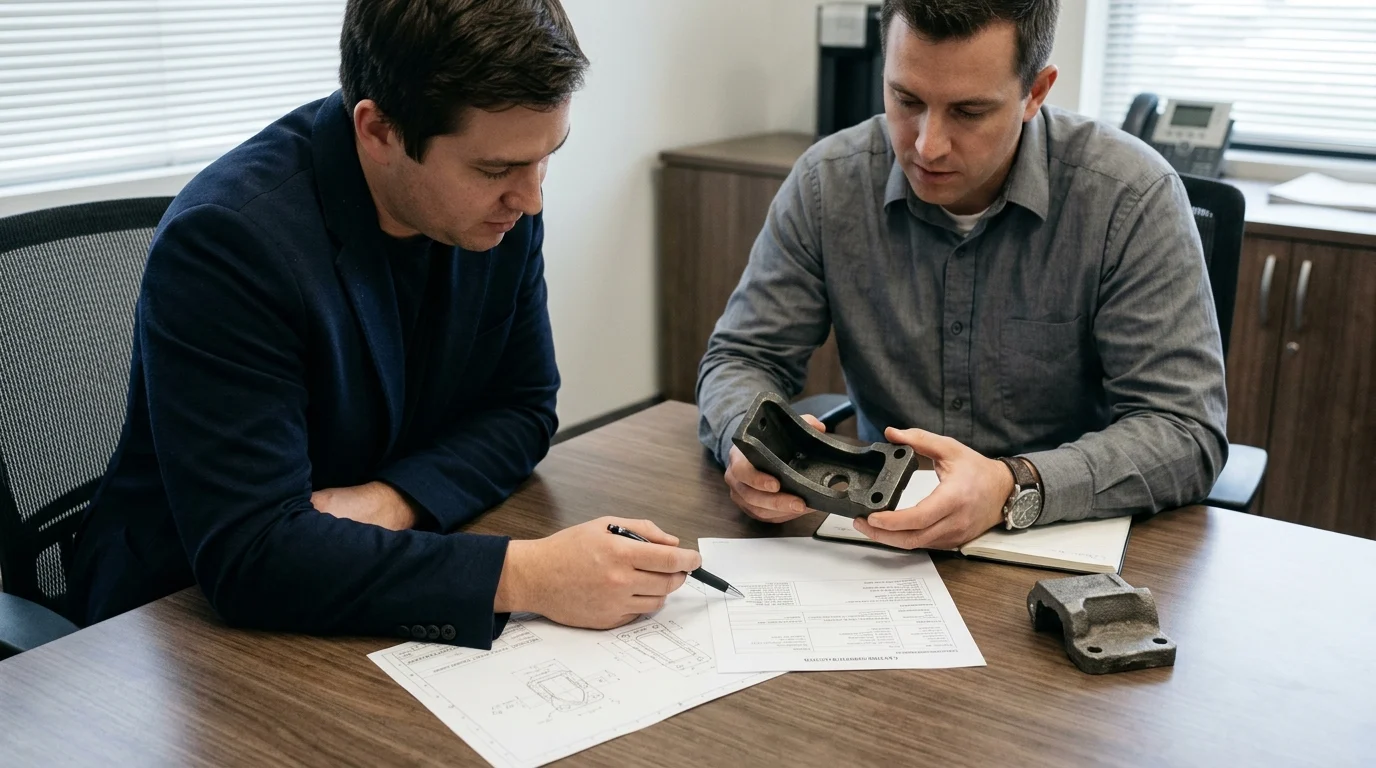
Even after a prospective foundry passes rigorous paper audits and process evaluations, the actual transition to full-scale production carries inherent operational risks. Implementing a highly structured, phased onboarding strategy allows OEMs to validate physical product quality and operational reliability before locking themselves into long-term, high-volume contractual commitments.
Audits, Sample Approval, and Pilot Runs
The physical validation phase should always commence with a comprehensive on-site or third-party facility audit to verify equipment maintenance schedules, raw material storage, and labor practices. Following a successful audit, the First Article Inspection (FAI) and the Production Part Approval Process (PPAP)—specifically Level 3 documentation—serve as critical, non-negotiable gateways. Procurement teams typically mandate a controlled pilot run of 50 to 150 units to establish a precise Process Capability Index (Cpk) of 1.33 or higher. This vital statistical proof guarantees that the foundry can consistently replicate the approved sample under normal, sustained production speeds without relying on excessive, hidden manual rework or 100% sorting.
How Procurement and Engineering Make Final Decisions
The final contract award requires seamless cross-functional consensus between the engineering and purchasing departments to ensure both technical specifications and commercial goals are met.
Key Takeaways
- The most important conclusions and rationale for casting supplier selection
- Specs, compliance, and risk checks worth validating before you commit
- Practical next steps and caveats readers can apply immediately
Frequently Asked Questions
Why shouldn’t OEM buyers choose a casting supplier on unit price alone?
Low piece price can hide higher costs from scrap, tool wear, rework, delays, and warranty claims. Compare total cost of ownership, not just the quote.
What certifications should a qualified casting supplier have?
At minimum, look for ISO 9001:2015. For automotive programs, require IATF 16949. Also verify the certificates are current and cover the actual production site.
How can buyers verify a foundry’s process capability?
Review process controls, defect data, Cpk or dimensional reports, sample inspection results, and audit findings. A supplier should provide clear, verifiable quality records.
Which casting process best reduces quality risk for tight tolerances?
It depends on the part. Investment casting usually offers tighter tolerance and lower defect risk than sand casting, while die casting suits high volumes with higher tooling cost.
Why is material traceability important when selecting a casting supplier?
Traceability confirms the correct alloy, heat, and source were used. It helps prevent hidden material deviations and makes containment, root-cause analysis, and recalls faster if issues arise.