Introduction
Pressure-test failures in investment castings usually point to more than a simple leak: they often reveal hidden porosity, shrinkage, inclusions, or process variation that compromises the entire pressure boundary. For parts such as valve bodies, pump housings, and fluid-system components, understanding why a casting cannot hold test pressure is essential to preventing scrap, rework, and field risk. This article explains the main defect mechanisms behind failed hydrostatic or pneumatic tests, how to trace them back to design, tooling, wax, shell, melting, and pouring conditions, and which corrective actions most effectively improve pressure integrity in production.
Why Investment Casting Pressure Test Failure Matters
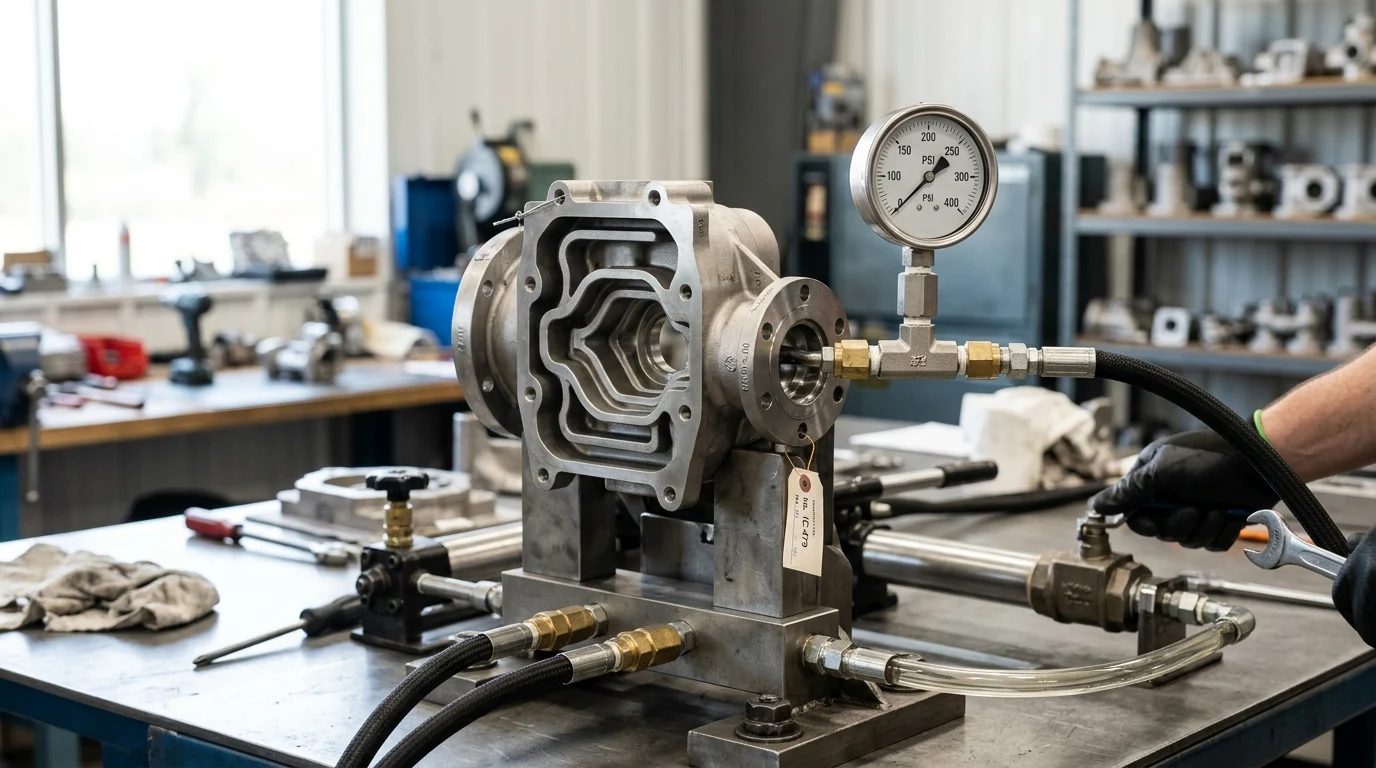
Subjecting components to a rigorous investment casting pressure test is a non-negotiable quality gate for parts designed to contain fluids or gases. This validation process typically involves hydrostatic or pneumatic testing, often requiring components to hold 1.5 times their maximum allowable working pressure (MAWP) for a specified duration without pressure decay. When a casting fails this test, it indicates a breach in the pressure boundary, compromising the component’s primary function.
Understanding the mechanics of these failures is essential for metallurgists and design engineers. A failed test does not merely signal a surface anomaly; it reveals internal interconnected voids that traverse the entire wall thickness of the casting. Addressing these failures requires a systematic approach to root cause analysis, metallurgical evaluation, and process optimization.
Critical pressure-containing applications
Investment castings are frequently specified for fluid handling systems, aerospace hydraulics, and petrochemical processing equipment. In these applications, components such as valve bodies, pump casings, and pressure vessels must routinely withstand extreme environments. Operating pressures in these sectors can easily range from 5,000 to 10,000 PSI, demanding absolute structural integrity.
The complex geometries achievable through investment casting—such as internal fluid galleries and thin-walled volutes—make the process ideal for these components. However, these same intricate designs complicate the solidification mechanics, increasing the risk of localized defects that can compromise the pressure boundary under high-stress conditions.
Business and safety impact of failure
The ramifications of a failed pressure test extend far beyond a simple rejected part. From a safety perspective, an undetected leak path in a high-pressure system can lead to catastrophic blowouts, toxic fluid exposure, and severe environmental contamination. Regulatory standards, such as ASME B16.34 for valves, mandate strict compliance, and failure to meet these criteria carries heavy legal and financial liabilities.
From a business standpoint, discovering a leak late in the manufacturing cycle is exceptionally costly. Industry data indicates that rework and scrap costs increase by over 300% if a casting defect is identified after precision CNC machining rather than at the foundry stage. Ensuring that foundries maintain stringent standards during the initial casting phase is critical to protecting project margins and maintaining supply chain reliability.
Common Causes of Pressure Test Failure
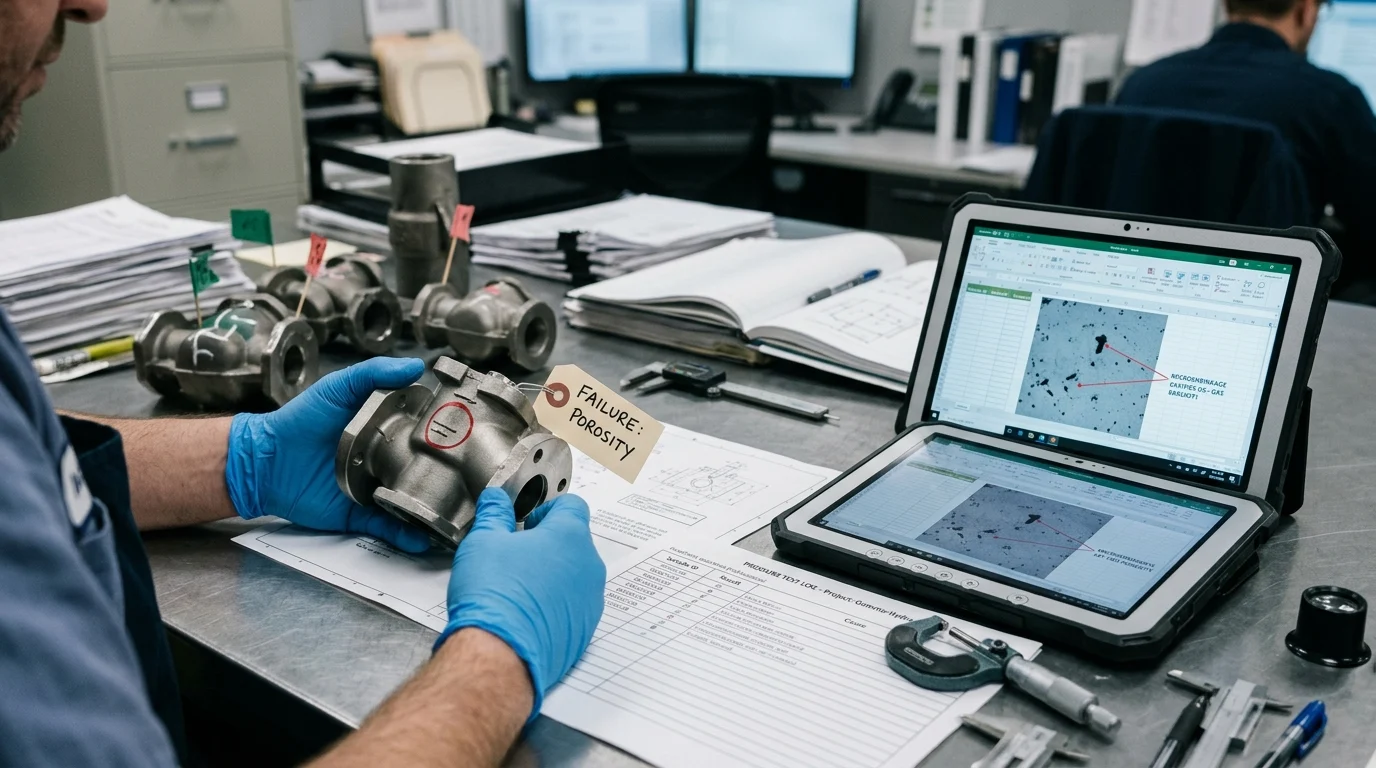
Pressure test failures in investment castings are rarely the result of a single catastrophic error; rather, they stem from microstructural anomalies that form during the cooling and solidification phases. Identifying these anomalies requires understanding the specific metallurgical phenomena that create continuous pathways through the casting wall.
Typical leak paths and casting defects
The most prevalent cause of leakage is interconnected micro-shrinkage. This occurs when isolated pools of liquid metal are cut off from the feeding system during solidification, typically in isolated heavy sections exceeding 0.5 inches in thickness. Gas porosity, caused by entrapped atmospheric gases or poor shell permeability, can also align to form continuous leak paths.
| Defect Type | Primary Cause | Typical Location | Leak Severity Potential |
|---|---|---|---|
| Micro-shrinkage | Inadequate gating/feeding | Transitions from thin to thick walls | High (often interconnected) |
| Gas Porosity | Low shell permeability | Upper cope sections | Moderate to High |
| Inclusions | Slag or ceramic shell breakdown | Sub-surface or near sharp radii | Moderate (localized) |
| Hot Tears | Restricted contraction during cooling | Internal corners and fillets | Severe (structural breach) |
Non-metallic inclusions, such as bits of ceramic shell or crucible refractory, can also cause failures. When these inclusions span the cross-section of a thin wall, they create a weak interface that fluids can bypass under high pressure.
Inspection methods for root cause analysis
When an investment casting pressure test yields a failure, engineers must deploy advanced non-destructive testing (NDT) to isolate the root cause. While the pressure test confirms the presence of a leak, it rarely pinpoints the microstructural origin. Helium leak detection is often utilized for critical aerospace parts, capable of identifying microscopic pathways with leak rates as low as 10^-9 atm cc/sec.
For internal volumetric inspection, digital radiographic testing (RT) or computed tomography (CT) scanning is employed to visualize shrinkage sponges or trapped gas pockets. Additionally, sectioning the failed casting and performing metallographic analysis under a scanning electron microscope (SEM) provides definitive evidence of whether the failure was driven by shrinkage, gas entrapment, or oxide bifilms.
How to Prevent and Resolve Failures
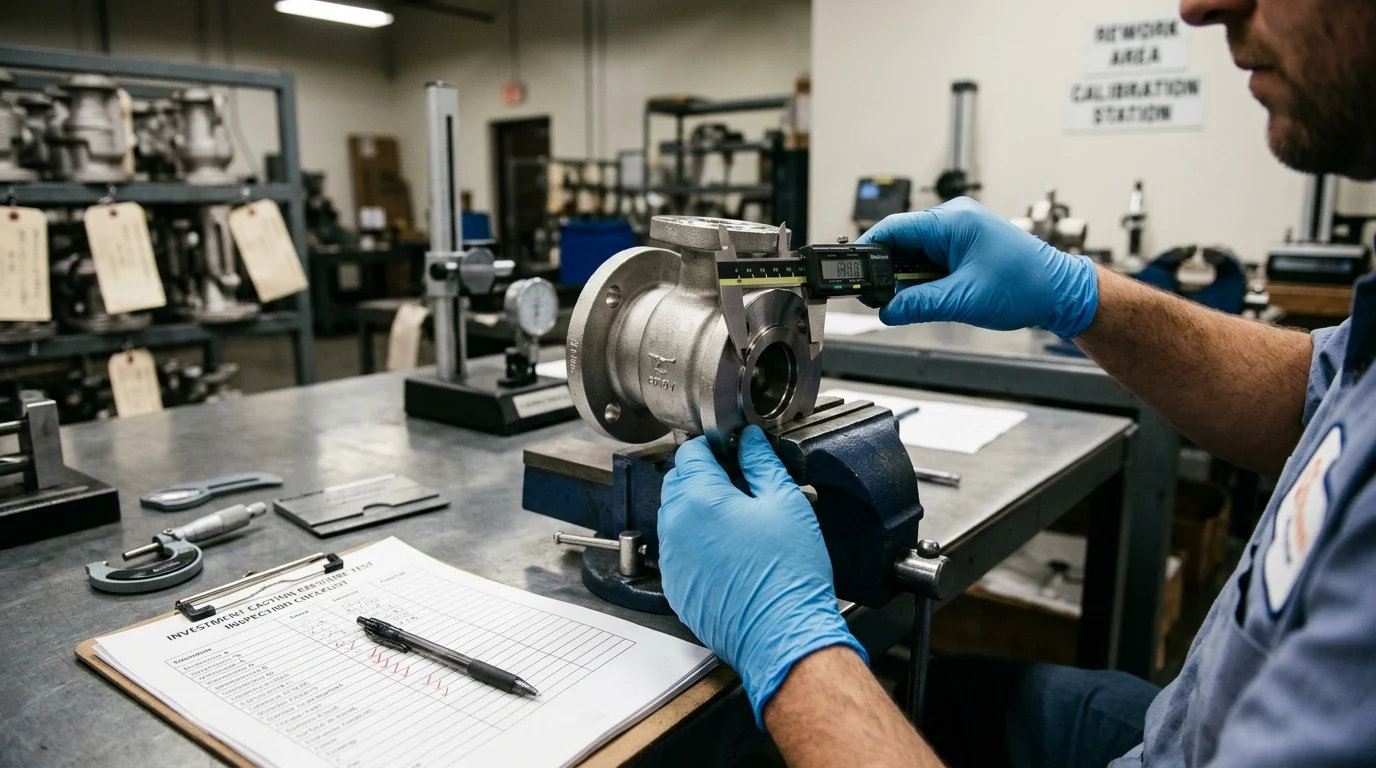
Eliminating pressure test failures requires a proactive strategy that begins in the tooling design phase and extends through pouring and post-processing. Foundries must balance thermodynamics, fluid dynamics, and material science to achieve directional solidification and a dense, homogeneous microstructure.
Process controls that reduce leakage
Process control is the first line of defense against casting defects. Engineers must utilize casting simulation software to optimize gating and risering designs, ensuring that the thermal gradient promotes directional solidification toward the feeding system. Maintaining strict control over shell pre-heat temperatures and pouring temperatures is critical to preventing premature freezing in thin sections.
Furthermore, shell permeability must be closely monitored. Maintaining a shell permeability above 15 millidarcies allows trapped gases to escape the mold cavity before the metal solidifies, drastically reducing the incidence of gas porosity. Vacuum induction melting (VIM) and pouring can also be employed for high-performance alloys to eliminate atmospheric gas absorption entirely.
When to repair, redesign, or reject castings
When a casting fails a pressure test, engineers must evaluate whether the component can be salvaged. For minor, non-structural micro-porosity (typically void diameters under 0.1 mm), vacuum impregnation is a highly effective and industry-accepted solution. This process forces low-viscosity methacrylate resins into the microscopic voids, sealing the leak path permanently without altering the component’s dimensional tolerances.
If the defect is larger but highly localized, weld repair may be permissible, provided it complies with standards like ASTM A488 and is followed by appropriate post-weld heat treatment (PWHT).
Key Takeaways
- The most important conclusions and rationale for investment casting pressure test
- Specs, compliance, and risk checks worth validating before you commit
- Practical next steps and caveats readers can apply immediately
Frequently Asked Questions
Why do investment castings fail a pressure test?
Most failures come from through-wall leak paths caused by interconnected micro-shrinkage, gas porosity, inclusions, or hot tears formed during solidification.
What pressure is typically used for an investment casting pressure test?
A common requirement is 1.5 times the maximum allowable working pressure, held for a specified time with no pressure drop or visible leakage.
How can you find the exact leak source after a failed test?
Use follow-up NDT such as helium leak testing for tiny paths and digital radiography to locate internal porosity, inclusions, or shrinkage zones.
Which casting areas are most likely to leak under pressure?
Thin-to-thick wall transitions, isolated heavy sections over 0.5 inch, sharp internal corners, and upper cope regions are frequent problem areas.
How can pressure test failures be reduced in future castings?
Optimize gating and feeding, improve shell permeability, smooth thickness transitions, and inspect early at the foundry before machining adds cost.