Introduction
In lost wax casting for medical parts, surface finish directly affects device safety, function, and regulatory compliance. A roughness profile that is acceptable for general industrial castings can create problems in medical applications, from poor sterilization performance to higher wear, corrosion risk, and inconsistent biocompatibility. This article explains how surface finish is defined for different medical components, which process variables most strongly influence the final result, and what practical steps can improve consistency from wax pattern to final finishing. By the end, readers will understand how to align casting parameters, material choice, and post-processing methods with the stringent surface requirements of medical manufacturing.
Surface Finish Requirements for Lost Wax Cast Medical Parts
Producing lost wax casting medical parts requires rigorous adherence to precise surface topography specifications. In the medical device industry, surface finish is not merely an aesthetic consideration but a critical functional parameter that dictates biocompatibility, wear resistance, and sterilization efficacy. Components such as surgical instruments, orthopedic implants, and cardiovascular devices demand highly controlled surface roughness (Ra) profiles to meet FDA and ISO 13485 standards.
The investment casting process is uniquely suited for creating the complex geometries required in modern medicine, but these geometric benefits are undermined if the surface characteristics fail to meet stringent regulatory guidelines. A highly refined surface finish is critical for maximizing corrosion resistance and preventing the microscopic harboring of biological contaminants.
Why surface finish matters
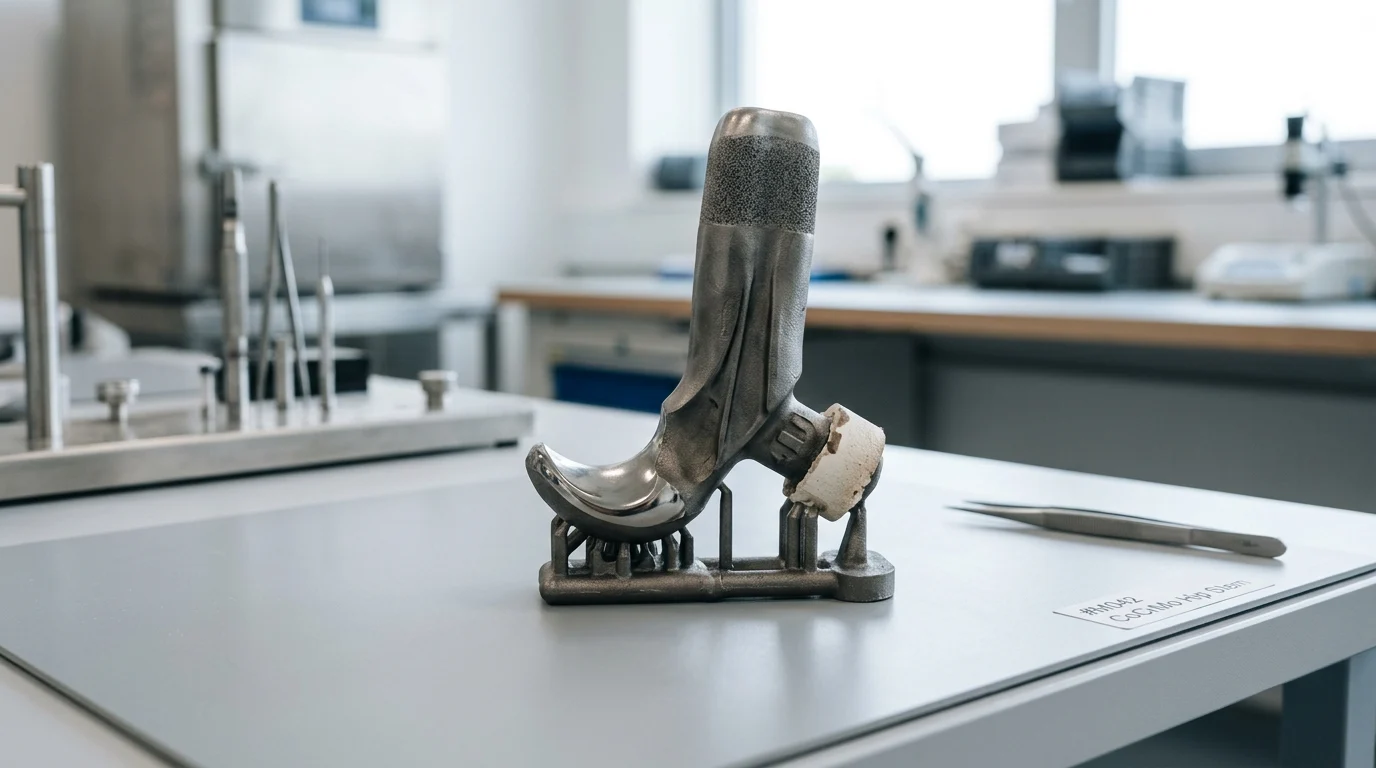
The functional requirements of a medical component strictly dictate its target surface roughness. For articulating surfaces in joint replacements, an ultra-smooth finish with an Ra value of less than 0.05 µm is essential to minimize friction and prevent the generation of polyethylene wear debris inside the human body. Conversely, areas designed for osseointegration, such as the stems of femoral implants, may require a precisely roughened texture ranging from Ra 3.0 to 5.0 µm to promote active bone ingrowth.
Furthermore, poor surface finish on reusable surgical instruments can harbor pathogens, significantly increasing the risk of healthcare-associated infections (HAIs). Standard clinical autoclave cycles struggle to penetrate microscopic crevices deeper than 0.5 µm, making smooth, easily cleanable surfaces a mandatory design feature. Fatigue life is another critical metric; microscopic surface imperfections act as stress concentrators, which can lead to premature mechanical failure in load-bearing implants subjected to millions of loading cycles annually.
Common defect modes
Achieving the required Ra values is frequently complicated by characteristic casting anomalies. Common defect modes include pitting, which occurs due to gas entrapment or localized shrinkage during alloy solidification, and non-metallic inclusions resulting from ceramic shell breakdown. When ceramic particles from the mold detach and embed themselves in the solidifying metal, they create hard spots that not only degrade the surface but also severely damage cutting tools during subsequent machining phases.
Another frequent issue is “orange peel,” a macroscopic surface rippling caused by improper metal-mold reactions, slow cooling rates, or excessive carbon content in the alloy. In high-stakes medical applications, parts exhibiting surface anomalies deeper than 0.1 mm or localized pitting exceeding 0.05 mm in diameter are typically subjected to immediate rejection. Mitigating these defects requires strict metallurgical control, optimized gating designs, and advanced non-destructive inspection protocols.
Process Variables That Improve Surface Finish
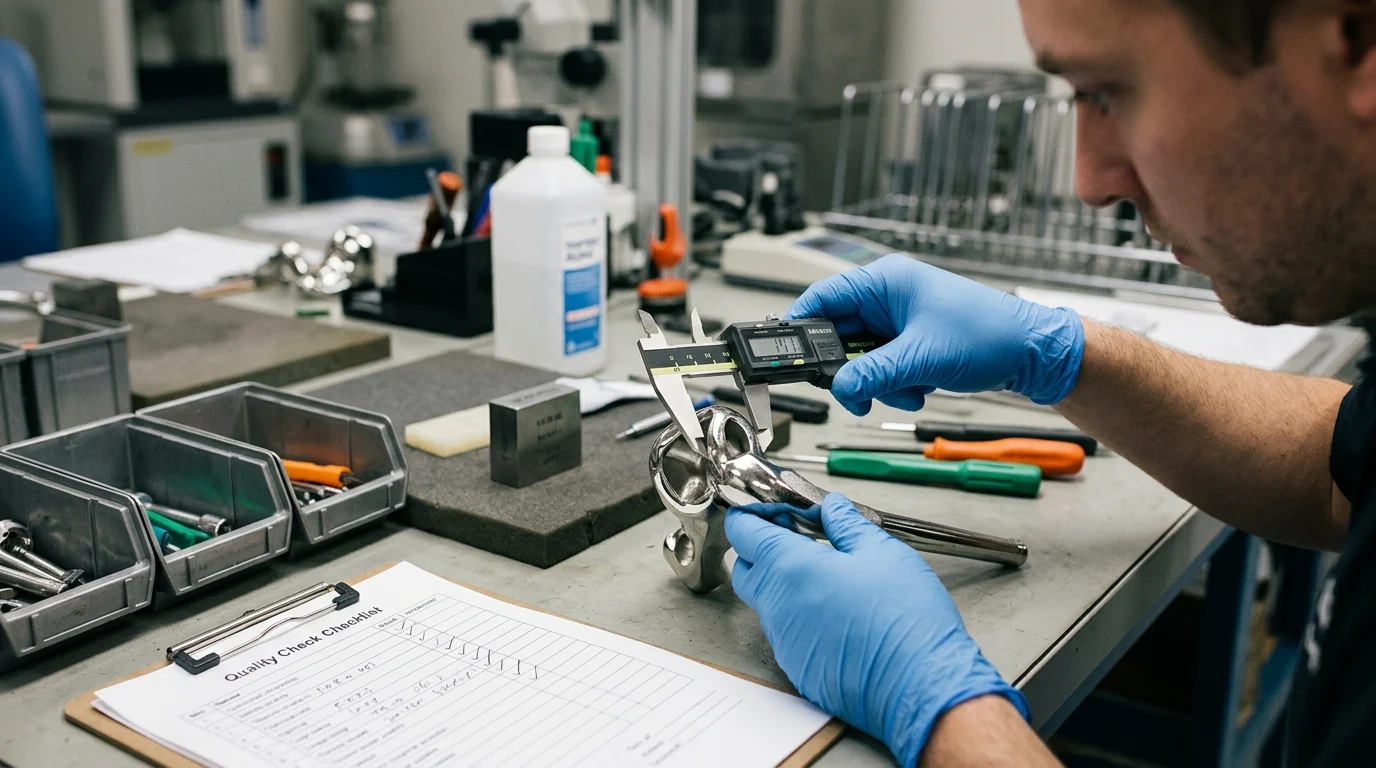
The inherent surface quality of an as-cast component significantly influences the cost and feasibility of subsequent machining and polishing operations. Optimizing the foundational variables within the investment casting workflow is essential to minimize baseline surface roughness, reduce downstream secondary operations, and maintain strict dimensional tolerances across high-volume production runs.
Wax pattern, shell, and alloy factors
The surface finish of the final casting is a direct replica of the initial wax pattern and the primary ceramic slurry coat. Wax injection must be tightly controlled; utilizing injection pressures between 1.5 and 3.0 MPa ensures complete die filling without inducing flow lines, sink marks, or cavitation defects. The primary ceramic slurry coat, which directly contacts the molten metal, requires meticulous formulation and strict environmental control.
Maintaining a slurry viscosity of 15 to 20 seconds (measured via a Zahn #4 cup) and using fine-mesh zircon flour (typically 325 mesh) prevents slurry penetration and surface roughness. The drying room must maintain a strict relative humidity of 45% to 55% and an ambient temperature of 20°C to 22°C to ensure the primary coat cures evenly without micro-cracking. Furthermore, controlling the alloy superheat and utilizing vacuum induction melting (VIM) reduces oxidation and gas porosity, which is vital when processing reactive lost wax casting medical parts such as titanium or cobalt-chrome alloys.
Finishing, inspection, and process control
Even with optimized casting parameters, medical components require rigorous post-processing and inspection to achieve final surface specifications. Processes such as centrifugal barrel finishing, drag finishing, and electropolishing are standard across the industry. For titanium alloys, which are highly reactive at elevated temperatures, chemical milling is often employed to remove the brittle alpha-case layer. This process typically requires the precise dissolution of 0.05 to 0.1 mm of surface material using a hydrofluoric and nitric acid bath.
Quality assurance relies on tactile profilometers and non-contact white light interferometry to verify Ra, Rz, and Rq parameters at a sub-micron resolution, ensuring no microscopic defects remain undetected.
| Finishing Method | Typical Ra Achieved (µm) | Primary Medical Application | Material Removal Rate |
|---|---|---|---|
| As-Cast (Optimized) | 1.6 – 3.2 | Baseline for all parts | None |
| Centrifugal Barrel | 0.4 – 0.8 | Surgical instruments | Moderate |
| Electropolishing | 0.1 – 0.4 | Blood-contacting devices | Low (0.01-0.03 mm) |
| Mechanical Buffing | < 0.05 | Articulating implants | High |
Choosing a Surface-Finish Strategy

Formulating a comprehensive surface-finish strategy requires medical original equipment manufacturers (OEMs) to balance clinical efficacy, regulatory compliance, and manufacturing economics. A systematic approach ensures that surface specifications are both functionally adequate and economically viable, preventing over-engineering while safeguarding patient health.
Key decision criteria
The primary decision criteria revolve around the functional necessity of the surface versus the exponential cost of achieving ultra-fine finishes. Specifying a surface roughness of Ra 0.1 µm when Ra 0.8 µm is clinically sufficient can inflate post-processing costs by up to 300%. Material selection also dictates the strategy; for example, cobalt-chrome alloys are notoriously difficult to machine and polish, making near-net-shape as-cast finishes highly desirable.
Engineers must also factor in chemical passivation requirements, such as those outlined in ASTM A967, which ensures the removal of exogenous iron and the formation of a protective chromium oxide layer on stainless steel components.
Key Takeaways
- The most important conclusions and rationale for lost wax casting medical parts
- Specs, compliance, and risk checks worth validating before you commit
- Practical next steps and caveats readers can apply immediately
Frequently Asked Questions
What surface finish is typically required for lost wax casting medical parts?
It depends on function: articulating implant surfaces may need Ra below 0.05 µm, while osseointegration zones often target Ra 3.0–5.0 µm. Define the finish by the device’s clinical use.
How can wax patterns improve surface finish in medical investment castings?
Use stable wax tooling and control injection pressure around 1.5–3.0 MPa to avoid flow lines, sink marks, and cavitation. A clean, accurate wax pattern transfers directly to a smoother casting surface.
Which shell parameters help produce smoother medical castings?
Keep the primary slurry at 15–20 seconds viscosity with fine 325-mesh zircon flour. Dry shells at 20–22°C and 45–55% humidity to prevent micro-cracking and rough surface transfer.
What defects most often ruin surface finish in lost wax casting medical parts?
Common issues are pitting, ceramic inclusions, and orange peel. These usually come from gas entrapment, shell breakdown, poor metal-mold reaction, or slow cooling, and often require rejection or extra finishing.
How do manufacturers verify surface quality for medical cast parts?
They combine surface roughness measurement, visual inspection, and non-destructive testing. Parts with deep anomalies, such as pits over 0.05 mm or surface defects beyond 0.1 mm, are typically screened out early.