Precision Casting vs Metal 3D Printing: Which Manufacturing Method Is Better?
When selecting a manufacturing method for metal components, engineers and procurement managers face a critical decision between precision casting and metal 3D printing. Both processes produce high-quality metal parts but differ significantly in cost, speed, material options, and application suitability. Understanding these differences helps manufacturers choose the right technology for their specific requirements, whether producing marine hardware, architectural fittings, or industrial valve components.
What Is Precision Casting?
Precision casting, also known as investment casting or lost-wax casting, is a manufacturing process that creates metal parts by pouring molten metal into a ceramic mold formed around a wax pattern. This method has been used for centuries and remains a cornerstone of modern manufacturing due to its ability to produce complex shapes with excellent surface finish and dimensional accuracy.
The process begins with creating a wax replica of the desired part, coating it with ceramic material, and then melting away the wax to leave a hollow mold. Molten metal is then poured into this mold, taking the exact shape of the original pattern. Our investment casting clamp base demonstrates how this method produces components with intricate geometries and tight tolerances that would be difficult to achieve through machining alone.
What Is Metal 3D Printing?
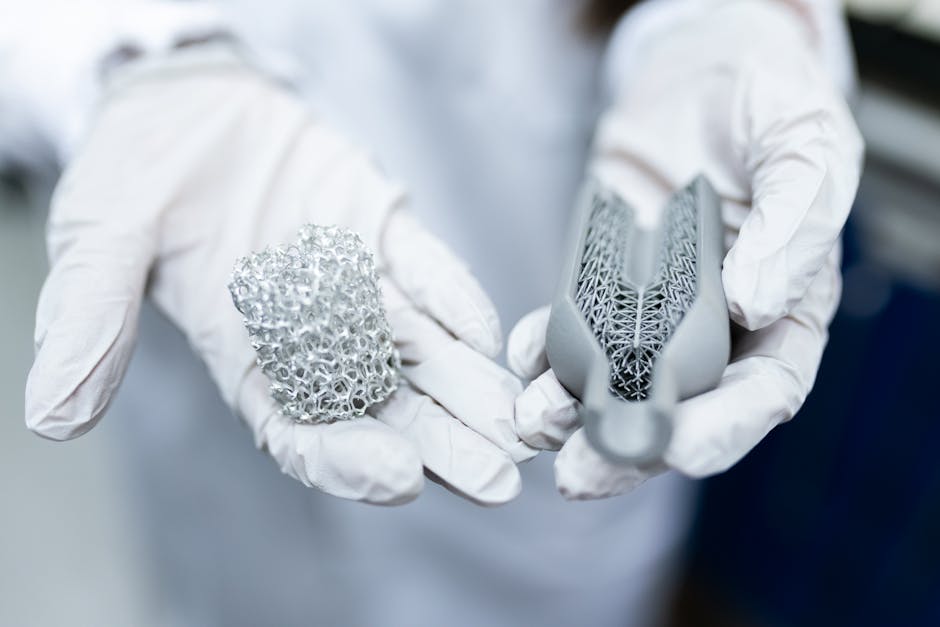
Metal 3D printing, or additive manufacturing, builds metal parts layer by layer using computer-aided design data. Common techniques include Selective Laser Melting (SLM) and Electron Beam Melting (EBM), which fuse metal powder particles using high-energy heat sources. This technology has revolutionized prototyping and low-volume production by eliminating the need for traditional tooling.
The primary advantage of metal 3D printing lies in its design freedom. Engineers can create complex internal structures, conformal cooling channels, and topology-optimized parts that would be impossible to manufacture using conventional methods. However, this flexibility comes with trade-offs in production speed and material selection compared to established casting processes.
Material Comparison: Precision Casting vs Metal 3D Printing
Material availability represents one of the most significant differences between these manufacturing methods. Precision casting supports an extensive range of alloys including stainless steel, carbon steel, aluminum, copper-based alloys, and specialized superalloys. Metal 3D printing has a more limited material palette, with stainless steel, titanium, and some nickel-based alloys being the most commonly available options. The history and development of precision manufacturing provides additional context on how these material capabilities evolved.
For applications requiring specific material properties, precision casting often provides more choices. Our stainless steel pressure cooker parts showcase how casting produces food-grade components with excellent corrosion resistance and mechanical properties. Similarly, our galvanized explosion-proof valve body demonstrates the specialized coatings and materials possible with investment casting for hazardous environments.
Cost Analysis: Initial Investment and Production Expenses
Cost considerations vary dramatically based on production volume and part complexity. Precision casting requires initial tooling investment for patterns and molds, which typically ranges from hundreds to thousands of dollars depending on part size and complexity. However, once tooling is established, per-part costs decrease rapidly, making casting highly economical for medium to high volume production runs.
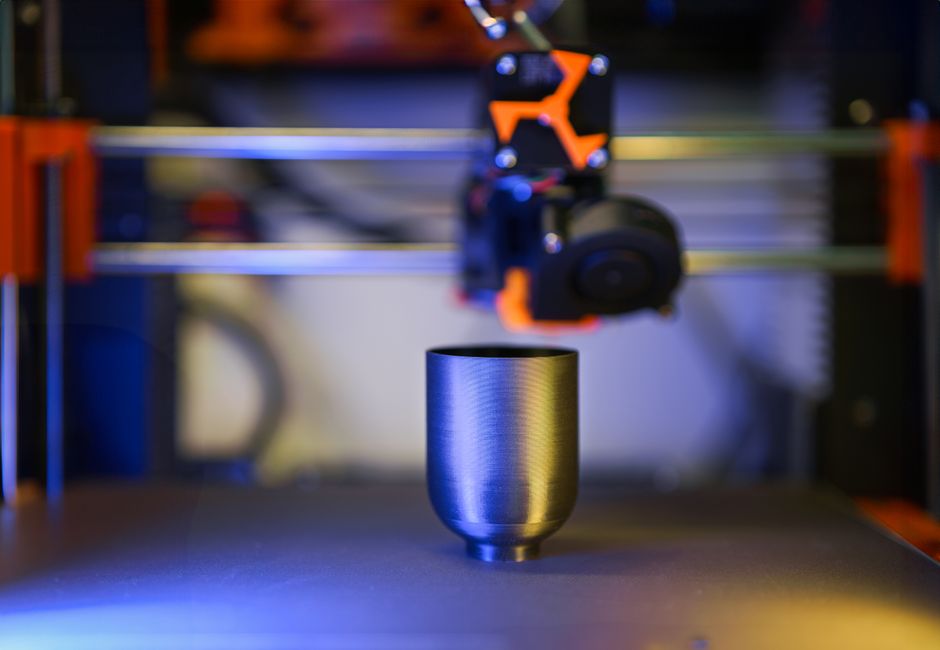
Metal 3D printing eliminates tooling costs entirely, making it attractive for low-volume production and custom parts. The per-part cost remains relatively constant regardless of volume, meaning that while 3D printing may be cheaper for producing single units or small batches, casting becomes more cost-effective as quantities increase.
Dimensional Accuracy and Surface Finish
Precision casting achieves dimensional tolerances of ±0.1mm to ±0.5mm depending on part size and configuration. Surface finishes typically range from Ra 1.6 to Ra 6.3 micrometers as-cast, which often requires minimal post-processing. Our mirror polished marine cruise ship parts demonstrate the excellent surface quality achievable through precision casting for aesthetic applications.
Metal 3D printed parts generally have rougher as-built surfaces (Ra 3.2 to Ra 12.5 micrometers) due to the layered manufacturing process and partially fused powder particles. Post-processing through machining, grinding, or polishing is often necessary to achieve functional tolerances and surface requirements. The National Institute of Standards and Technology provides guidelines on surface integrity assessment for manufactured components.
Production Speed and Scalability
Production speed differs substantially between these methods. Precision casting typically requires 1-4 weeks from order to delivery for standard parts, including pattern making, mold preparation, casting, and finishing. Once established, casting lines can produce hundreds or thousands of parts per day with consistent quality.
Metal 3D printing machines build parts over 1-7 days depending on size and complexity, with limited batch sizes due to build platform constraints. While printing itself may be faster for single parts, the technology struggles to match casting’s throughput for high-volume orders.
Design Complexity and Geometric Freedom
Metal 3D printing offers superior geometric freedom, capable of producing internal channels, lattice structures, and topology-optimized designs that reduce weight while maintaining strength. This capability proves invaluable for aerospace, medical implants, and specialized industrial applications where performance optimization justifies higher production costs.
Precision casting handles complex geometries well but faces certain constraints. Undercuts require movable core pieces, and some designs may need to be split into multiple parts for casting. However, modern casting techniques combined with advanced tooling can produce highly complex shapes economically. Our precision casting architectural hardware fittings demonstrate the intricate designs achievable through investment casting for decorative and structural applications.
Application Suitability: When to Choose Each Method
Selecting between precision casting and metal 3D printing depends on specific application requirements. Choose precision casting when:
- Production volume exceeds 100 units
- Material requirements are specialized or require specific alloys
- Tight dimensional tolerances and excellent surface finish are critical
- Cost-effectiveness is a primary concern for production runs
- Parts require proven performance in demanding environments
Choose metal 3D printing when:
- Design complexity exceeds casting’s manufacturing capabilities
- Low-volume or custom production is required
- Rapid prototyping and design iteration are necessary
- Lightweight lattice structures or internal cooling channels are needed
- Tooling costs must be avoided for initial production runs
Feature Comparison: Precision Casting vs Metal 3D Printing
| Feature | Precision Casting | Metal 3D Printing |
|---|---|---|
| Material Range | Extensive (steel, aluminum, copper, superalloys) | Limited (stainless steel, titanium, some nickel alloys) |
| Typical Tolerances | ±0.1mm to ±0.5mm | ±0.2mm to ±0.5mm |
| Surface Finish (as-built) | Ra 1.6 – Ra 6.3 μm | Ra 3.2 – Ra 12.5 μm |
| Production Lead Time | 1-4 weeks | 1-7 days |
| Cost-Effective Volume | 100+ units | 1-50 units |
| Design Complexity | High (with tooling considerations) | Very High (near unlimited) |
| Post-Processing | Minimal | Often required |
Making the Final Decision
The choice between precision casting and metal 3D printing ultimately depends on your specific project requirements, production volume, and performance criteria. Both technologies offer distinct advantages that make them indispensable in modern manufacturing. For most production applications requiring cost-effective solutions with excellent quality, precision casting remains the proven choice. For highly specialized components with complex geometries or rapid prototyping needs, metal 3D printing provides unique capabilities that traditional methods cannot match.
Our alloy steel curtain bracket and water glass casting weighing hook exemplify how precision casting delivers reliable, high-quality components for demanding applications. The Web Content Accessibility Guidelines can help ensure your manufacturing website effectively communicates these technical specifications to all users. Consulting with manufacturing experts helps ensure the selected method aligns with your technical specifications and budget constraints.
Frequently Asked Questions
Q: Which manufacturing method produces better dimensional accuracy?
Precision casting typically achieves tighter as-cast tolerances (±0.1mm to ±0.5mm) compared to metal 3D printing (±0.2mm to ±0.5mm). However, both methods can be machined to tighter specifications if required.
Q: Can metal 3D printing replace precision casting for all applications?
No. Metal 3D printing cannot replace precision casting for high-volume production due to speed and cost constraints. Additionally, casting offers a broader range of materials and proven performance in many industrial applications.
Q: How long does each process take from design to finished part?
Metal 3D printing typically takes 1-7 days for single parts or small batches. Precision casting requires 1-4 weeks but becomes significantly faster per unit when producing larger quantities.
Q: What surface finish can I expect from each method?
Precision casting produces superior as-cast surface finishes (Ra 1.6-6.3 μm). Metal 3D printed parts typically require post-processing to achieve comparable surfaces (Ra 3.2-12.5 μm as-built).
Q: Which method is more cost-effective for large production runs?
Precision casting is significantly more cost-effective for production runs exceeding 100 units due to lower per-part costs after initial tooling investment. Metal 3D printing maintains constant per-part costs regardless of volume.