Introduction
Shrinkage defects in precision steel casting develop when molten steel contracts during solidification but cannot be adequately fed to the areas freezing last. The result may be large internal cavities or fine porosity, both of which weaken strength, fatigue resistance, and dimensional reliability. Understanding why this happens requires looking beyond the defect itself to the interaction of alloy behavior, part geometry, mold design, gating and riser layout, and cooling conditions. This article explains the main causes of shrinkage defects in precision steel casting, how they form at different stages of solidification, and which process factors most strongly influence their occurrence, providing a clear foundation for the detailed discussion that follows.
Why shrinkage defects matter in precision steel casting
In precision steel casting, shrinkage defects represent one of the most critical metallurgical challenges encountered during manufacturing. As molten steel cools and transitions from a liquid to a solid state, it undergoes a natural volumetric contraction governed by the thermodynamics of phase transitions. For most commercial steel alloys, this liquid-to-solid phase change results in a volumetric shrinkage ranging between 3% and 7%.
When this contraction is not properly compensated for by a continuous supply of molten metal, voids inevitably form within the component. These voids manifest either as localized, large macro-shrinkage cavities or as widely dispersed micro-shrinkage porosity. Both types severely compromise the structural integrity and operational safety of the final industrial part.
Quality and performance impact
The presence of internal shrinkage voids directly undermines the mechanical properties of a cast component. Shrinkage cavities act as severe stress concentrators, significantly reducing the effective load-bearing cross-section of the part. Quantitative metallurgical studies indicate that even a seemingly minor 2% internal porosity level can diminish the fatigue life of a dynamically loaded steel component by up to 40%. For instance, a structural bracket designed to withstand 50,000 load cycles may fail at just 30,000 cycles if micro-shrinkage is present near a critical bend radius.
Furthermore, ultimate tensile strength and impact toughness are drastically reduced. In fluid-handling applications, interconnected micro-shrinkage often leads to the failure of pressure-retaining components. Valves or pump housings suffering from subsurface porosity frequently fail standard hydrostatic pressure tests, leaking at pressures as low as 1,500 PSI and rendering them entirely unfit for high-stress environments.
Commercial and supply risks
Beyond physical performance degradation, uncontrolled shrinkage introduces severe commercial liabilities and supply chain disruptions. Professional foundries typically target a strict internal scrap allowance of 3% to 5% for complex steel parts. When shrinkage defects exceed these thresholds, the immediate result is a sharp increase in rejected batches, driving up unit costs and delaying shipment schedules. Additionally, the administrative burden of processing non-conformance reports (NCRs) and managing vendor returns strains internal quality assurance resources.
Even when defects are deemed salvageable, the required weld repair, localized heat treatment, and subsequent non-destructive re-testing introduce substantial lead time delays, often adding 15% to 20% to the baseline manufacturing cost. Selecting a manufacturing partner with stringent quality control protocols, as emphasized in professional foundry operations detailed at https://www.nbsjcasting.com/about/, is essential to mitigate these financial and scheduling risks.
What causes shrinkage defects during solidification
Understanding the root mechanisms of shrinkage requires examining the complex solidification dynamics of molten metal. For a casting to cool without internal voids, solidification must occur directionally. The metal should freeze progressively from the furthest extremities of the mold toward the risers, which act as reservoirs of liquid metal.
When this directional freezing is interrupted, isolated pools of liquid metal become trapped. As these isolated thermal zones—known as hot spots—finally cool and contract, no additional liquid is available to fill the resulting void. This causes a distinct shrinkage cavity at the last point of solidification. Predicting the exact location of these hot spots is essential for developing a defect-free manufacturing strategy.
Alloy, geometry, and section thickness
The inherent properties of the chosen alloy and the physical geometry of the part are primary drivers of shrinkage behavior. Different steel grades exhibit distinct volumetric contraction rates during cooling. Design engineers must collaborate closely with metallurgists to select an alloy that balances mechanical requirements with favorable castability. For example, standard low-carbon steels typically shrink by 1.5% to 2.0%, whereas austenitic stainless steels can experience higher shrinkage rates between 2.0% and 2.5%.
| Steel Alloy Classification | Typical Volumetric Shrinkage Rate | Solidification Temperature Range |
|---|---|---|
| Low Carbon Steel | 1.5% – 2.0% | Narrow (Approx. 30°C) |
| Austenitic Stainless Steel | 2.0% – 2.5% | Moderate (Approx. 50°C) |
| High Manganese Steel | 2.6% – 3.0% | Wide (Approx. 80°C) |
Geometry plays an equally critical role. Components designed with abrupt changes in section thickness naturally create thermal imbalances. Industry guidelines suggest that cross-sectional thickness transitions exceeding a 1:2 ratio frequently interrupt directional feeding. The thinner sections freeze rapidly, cutting off the fluid feed path to the slower-cooling thicker sections and practically guaranteeing a shrinkage defect in the heavier mass.
Mold, feeder, gating, and pouring factors
The design of the mold, gating system, and feeders dictates how effectively molten metal is maintained during cooling. Risers must be mathematically sized using Chvorinov’s rule to ensure they remain liquid longer than the casting itself. Industry standards dictate that a properly designed riser should contain 15% to 20% more volume than the isolated hot spot it is intended to feed. Additionally, using insulating or exothermic feeder sleeves can significantly enhance riser efficiency, allowing them to remain molten for extended periods without requiring excessive metal volume.
Furthermore, pouring parameters are highly critical. Pouring molten steel at excessively high temperatures—often greater than 100°C above the alloy’s liquidus temperature—exacerbates total volumetric contraction and damages the mold cavity. Conversely, pouring at a temperature lower than 50°C above liquidus prevents proper feeding and causes premature freezing. Balancing these precise thermal dynamics is a core competency in advanced precision steel casting.
How to diagnose and prevent shrinkage defects
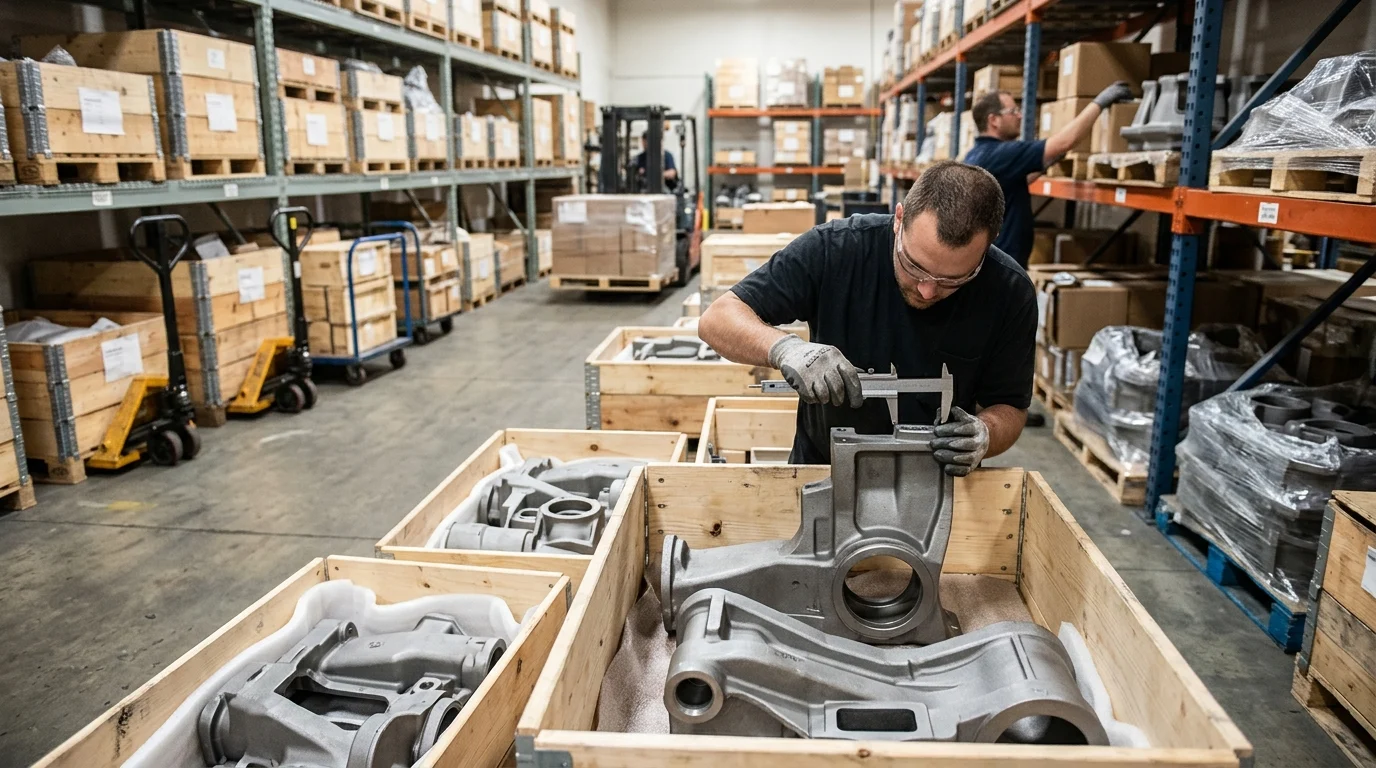
Eradicating shrinkage defects requires a comprehensive, dual-pronged approach: rigorous diagnostic testing to identify existing flaws in sample batches, and proactive engineering to prevent their occurrence in full-scale production runs.
Modern manufacturing facilities rely heavily on a combination of digital process simulation and advanced non-destructive testing (NDT) protocols to ensure that components compromised by internal voids never reach the end-user. By establishing strict baseline metrics, quality control teams can isolate variables and implement targeted corrective measures.
Inspection methods and process checks
Detecting subsurface shrinkage necessitates sophisticated NDT methodologies.
Key Takeaways
- The most important conclusions and rationale for precision steel casting
- Specs, compliance, and risk checks worth validating before you commit
- Practical next steps and caveats readers can apply immediately
Frequently Asked Questions
What mainly causes shrinkage defects in precision steel casting?
They occur when molten steel contracts during solidification and no liquid metal can feed the last hot spot, leaving internal voids or cavities.
Which part designs are most likely to develop shrinkage defects?
Thick sections, sudden wall-thickness changes, heavy junctions, and isolated hot spots are the most common risk areas in precision steel castings.
Do different steel grades change shrinkage risk?
Yes. Low-carbon steels usually shrink less than austenitic stainless or high-manganese steels, so alloy selection affects feeding design and defect risk.
How can a foundry reduce shrinkage defects in precision steel casting?
Use proper riser and gating design, promote directional solidification, control pouring temperature, and verify hot spots with simulation or process review.
Why are shrinkage defects a serious quality problem?
They reduce strength, fatigue life, and pressure tightness, which can cause test failures, more scrap, costly repairs, and shipment delays.